Dapeng Town Industrial Park, Tongshan District, Xuzhou City, Jiangsu Province, China
South Africa‘s solar PV industry continues to expand, with contiguous arrays steadily rolling out and injecting stable clean energy into the grid. Industry attention mostly centers on modules, inverters, and mounting systems—yet the warehousing and O&M support buildings that sustain smooth year-round station operations are often underestimated. Solar projects are located in open, exposed terrain with intense sunlight and frequent wind-blown sand. Material storage and on-site repair conditions directly affect station availability.
South Africa‘s solar pipeline is accelerating. In the first quarter of the 2026/27 financial year alone, NERSA registered 122 solar PV facilities totaling 236 MW, part of a broader 124-facility registration representing R20.18 billion in investment . Utility-scale projects are reaching completion: EDF and Anglo American‘s 520 MW Koruson 2 complex is now fully operational, comprising a 240 MW solar plant and two 140 MW wind farms .
SolarAfrica has reached financial close on the full 342 MW Phase 1 of its SunCentral development, with the first 114 MW facility energised and a R1.35 billion transmission substation handed over . Eskom has broken ground on a R1.2 billion 75 MW solar plant at Lethabo, one of 17 renewable projects planned across its coal-fired station footprint . Each of these projects requires dependable on-site warehousing and maintenance infrastructure.
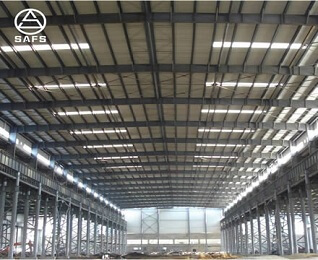
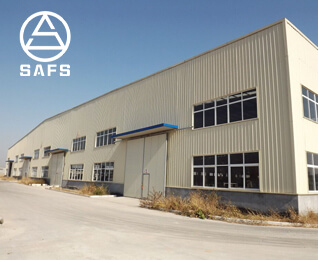
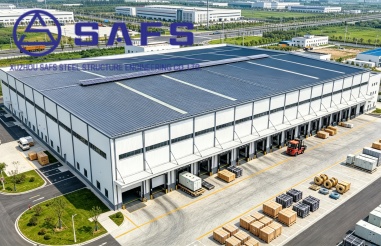
Solar modules, cables, and combiner boxes are bulky items requiring generous loading space and protection from rain and sun. Fuses, communication modules, and monitoring sensors demand higher standards of dust protection and temperature control. Steel structure warehouses enable flexible zoning—separate sealed storage rooms and open stacking areas—combined with vehicle access lanes, achieving categorized material management that lets O&M personnel retrieve spare parts quickly and reduce fault waiting time.
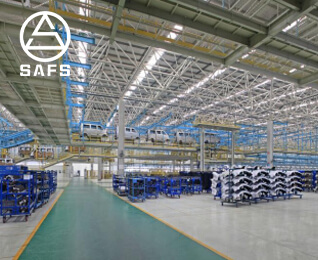
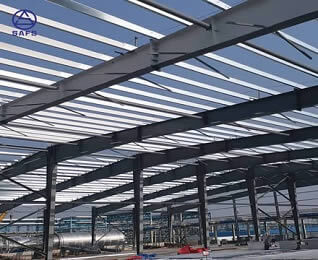
Inverters, energy storage converters, and tracking controllers should not be dismantled or repaired in open-air environments when faults occur. Dedicated steel structure O&M workshops can be equipped with repair bays, small lifting equipment, and tool storage areas—isolating wind-blown sand and direct sun exposure while ensuring safe, orderly maintenance work. Workshop layouts must also reserve room for future equipment iterations and repair bay expansion, adapting to changing requirements over the station‘s multi-year operational cycle.
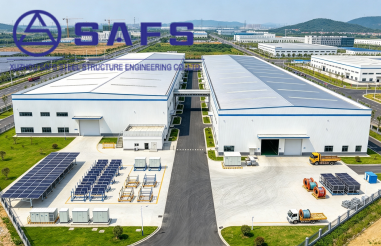
These solar support buildings prioritize efficient delivery over complex architectural forms, but have clear standards for construction timelines, structural durability, thermal insulation, and corrosion protection. South Africa‘s coastal and inland conditions vary significantly—marine salt spray in Durban and Coega demands hot-dip galvanizing or high-performance coating systems, while inland Highveld sites face intense UV and temperature swings . Prefabricated steel structures cut on-site labor and allow support facilities to be delivered in step with the main PV installation.
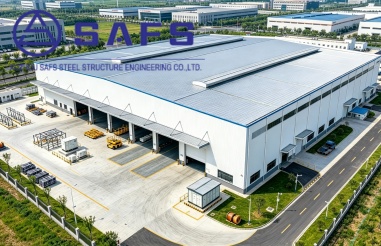
SAFS Steel Structure is familiar with the construction pace and outdoor environmental characteristics of South African solar stations. Leveraging mature steel structure systems, we create warehouses and O&M workshops adapted to load requirements and easy to expand—ensuring support facilities are delivered alongside main PV works. If you are planning spare parts warehouses or O&M workshops for a South African solar project, contact SAFS to develop a customized solution aligned with your site conditions and O&M plan.
Contact Xuzhou SAFS Steel Structure Engineering Co., Ltd. (SAFS)
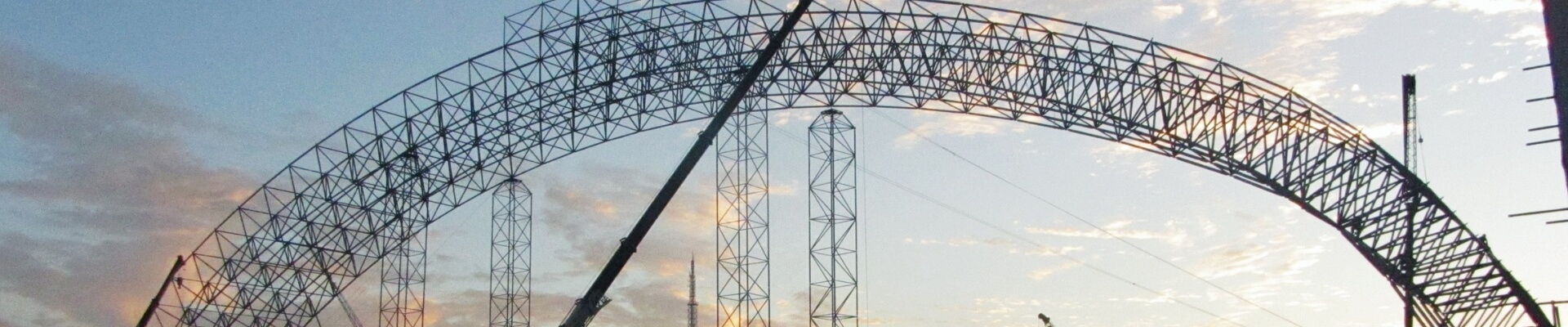
Specializing in steel structure engineering, pipe truss engineering, space frame engineering, welded ball space frames, trestle engineering, and related fields.