
Dapeng Town Industrial Park, Tongshan District, Xuzhou City, Jiangsu Province, China
Building warehouses in Brazil for storing various construction materials such as ore and clinker is a complex engineering project presenting unique challenges. Brazil’s hot and rainy climate, stringent environmental regulations, and complex logistics demands place exceptionally high requirements on warehouse design and construction. Leveraging our extensive project experience globally, particularly in emerging markets, we provide comprehensive professional support throughout the entire process—from planning to operations.
I.Environmental Protection and Dust Control: Meeting Stringent Regulatory Requirements
Brazil’s environmental regulations are becoming increasingly stringent, with communities exhibiting low tolerance for dust and noise pollution.
Core Challenges:
Our Systematic Solution:
II.Operational Efficiency and Logistics Optimization: Enhancing Turnover Performance
warehouses must serve efficient internal and external logistics.
Core Pain Points:
Our Systematic Solutions:
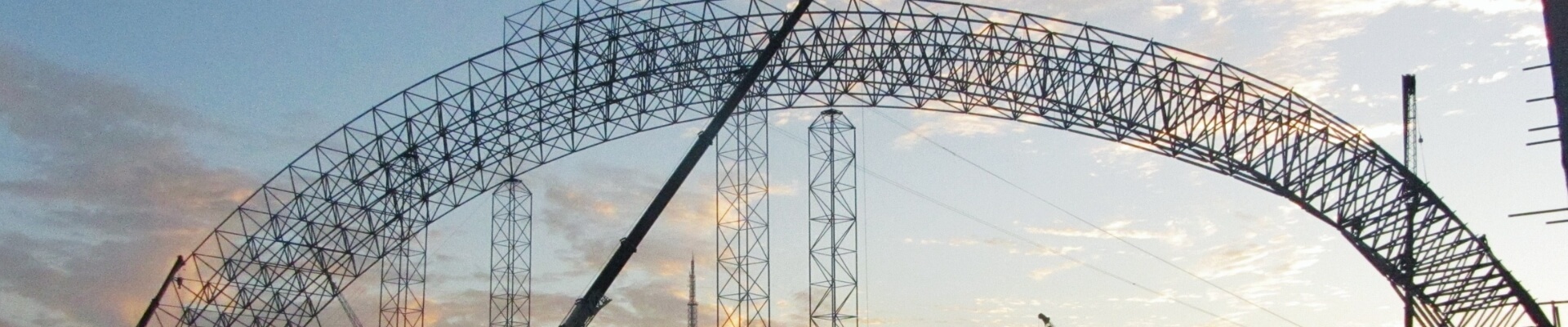
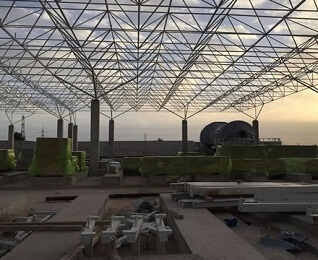
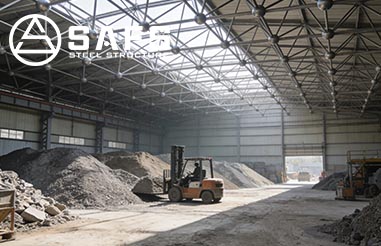
Utilize ultra-wide span steel structures (90-150 meters) to create column-free interiors, enabling flexible partitioning of material zones via movable bulkheads.
Optimized “U-shaped” or ‘circular’ vehicle flow routes ensure efficient “loaded truck entry → rapid loading/unloading → empty truck exit” cycles, preventing cross-traffic and congestion.
Bulkhead walls feature steep inclines or curved designs, lined internally with ultra-high molecular weight polyethylene panels to prevent material adhesion.
III. Structural Safety and Durability: Withstanding the Tests of Nature and Time
Brazil’s environment poses persistent challenges to the durability of building structures.
Core Pain Points:
Our Systematic Solutions:
The primary steel structure employs an ultimate protective solution of “thermally sprayed aluminum (or zinc) + sealing coating,” or utilizes a heavy-duty epoxy zinc-rich system, providing over 25 years of long-term protection. All fasteners are made of stainless steel or Dacromet-coated products.
The roofing system employs a standing seam system with superior wind-lifting resistance, with wind load capacity verified through calculations. Structural design fully complies with local codes and incorporates necessary seismic calculations.
We understand that success in Brazil depends not only on technology, but also on deep understanding of the local market and resource integration.
Optimized Total Cost of Ownership: We significantly reduce your long-term operating costs through energy-efficient designs (such as integrated photovoltaic rooftops), long-lasting corrosion protection, and low-maintenance materials.
Let us join hands to build a modern building materials distribution hub in Brazil that combines efficiency, environmental sustainability, and durability—providing a solid foundation for your business growth.