
Dapeng Town Industrial Park, Tongshan District, Xuzhou City, Jiangsu Province, China
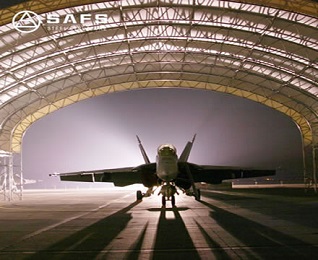
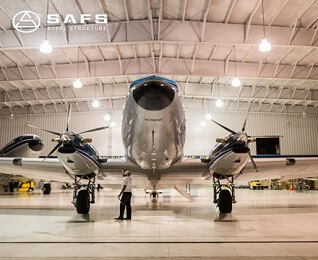
As a steel structure supplier, constructing aircraft maintenance hangars presents a multifaceted challenge integrating technical expertise, safety protocols and innovative solutions. Such structures must meet stringent requirements including large spans, high safety standards and flexible operational maintenance. Drawing upon global benchmark projects and regulatory standards, this article analyses the core considerations and solutions for hangar construction from the perspective of steel structure suppliers.
I.Long-Span Structural Design: Technical Precision and Material Innovation
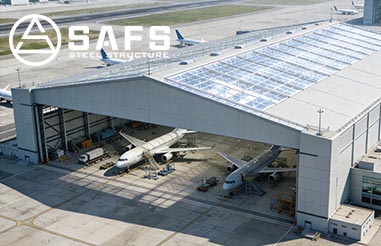
The span of aircraft maintenance hangars directly determines their functionality and competitiveness. For instance, the Ethiopian Airlines B747 maintenance hangar employs an all-steel structure featuring a steel space frame and lattice columns, achieving an 81.5-metre span and becoming an iconic project in Africa. Meanwhile, the maintenance hangar at Xiamen Xiang’an International Airport set a new world record with a single span of 269.5 metres, its roof weighing 11,300 tonnes and rising to a height of 42.5 metres. Core technologies for such projects include:
Structural System Optimisation:
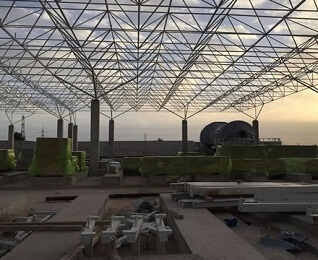
Combining spatial trusses with lattice structures balances localised loads and overall stability.
Finite element analysis and dynamic modal response simulations ensure structural safety under extreme conditions such as earthquakes and high winds.
II.Lifting Equipment and Internal Logistics: Precision Coordination of Safety and Space
Hangar interiors require integrated heavy-duty lifting systems while avoiding conflicts with aircraft tail sections and roof structures. A Kenyan hangar project exemplifies this approach:
Three crane systems operate in designated zones: a central crane directly lifts aircraft fuselages (5-tonne capacity), while flanking cranes specialise in engine maintenance (15-tonne capacity). Universal joints and guide rollers accommodate installation deviations under the curved roof.
Radio remote control and high-protection design: Operators remotely control lifting operations, with crane surfaces coated in specialised anti-corrosion finishes to withstand Africa’s high-salinity, high-humidity environment.
III. Fire Protection and Safety Standards: From Structural Fire Resistance to Operational Management
Fire risks within the hangar centre on hydrocarbon fuels and valuable equipment, necessitating strict adherence to fire safety regulations:
Classified Fire Protection Design:
Per the Aircraft Hangar Fire Protection Design Code, Category I hangars (housing multiple large aircraft) require Class I fire resistance ratings, with structural supports meeting specified fire endurance limits.
Foam Fire Suppression Systems:
For aircraft fuel fires, high-expansion foam extinguishing is prioritised to minimise water damage to electronic equipment.
Operational Safety Management:
Hangar doors must be operated by designated personnel, with red line restricted zones established. Doors must be secured only after aircraft have come to a complete standstill.
Aircraft maintenance hangars represent the pinnacle of steel structure technology. Their construction demands not only rigorous material and process standards but also forward-thinking safety planning and cross-disciplinary collaboration. As a steel structure supplier, we focus on large-span structures, lifting safety, fire protection regulations, and green intelligent solutions. Through global project experience, we continuously empower aviation infrastructure development. Looking ahead, as more colossal hangars are realised, steel structure technology will further drive the advancement and innovation of the aviation maintenance industry.