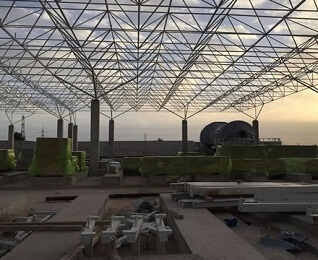
Dapeng Town Industrial Park, Tongshan District, Xuzhou City, Jiangsu Province, China
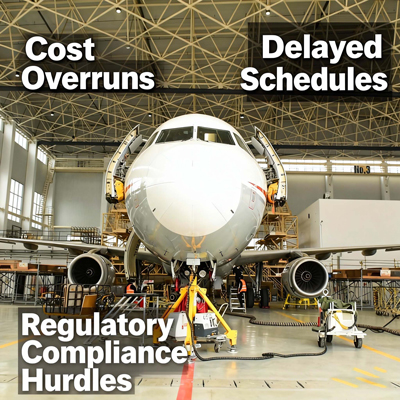
During hangar operations, the following issues directly impact corporate decision-making and costs:
I.Targeted Solutions for Steel Structure Maintenance Hangars
Modular Design for Cost Reduction and Efficiency: Utilizing steel structures as the primary framework reduces material usage by 40% compared to traditional concrete, with overall costs amounting to only 30%-50% of conventional hangars. Modular construction shortens the cycle to 1-3 months, enabling enterprises to rapidly commence operations and achieve returns.
Flexible Design Solves Space Challenges:
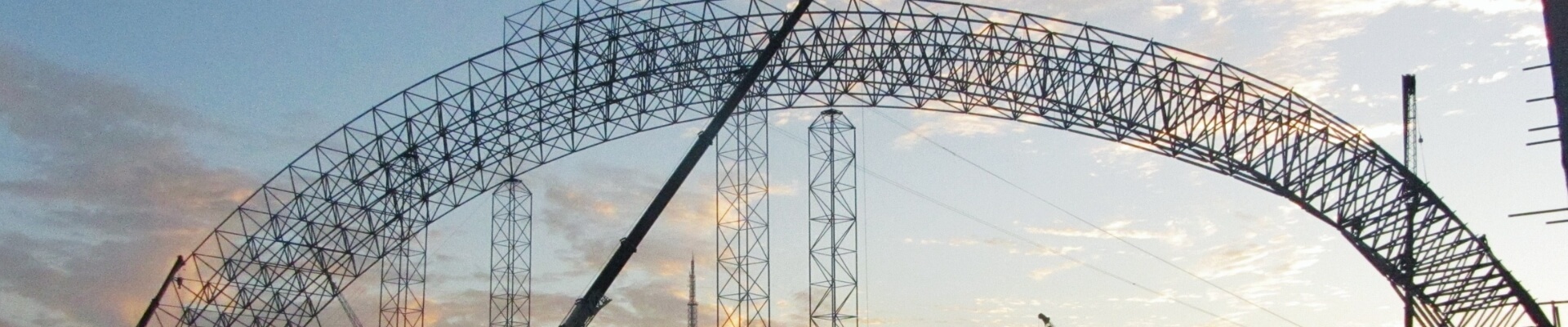
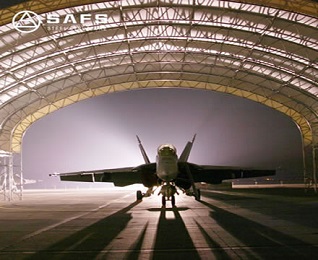
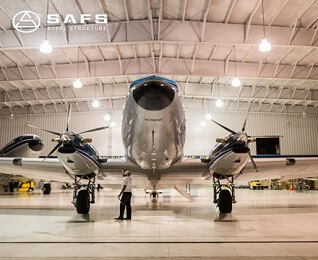
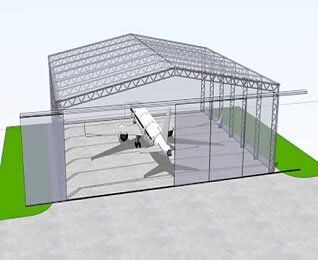
The roof employs a space frame structure, enabling large spans without column obstructions for optimal space utilization. Pre-installed aircraft service pits house pipelines underground, reducing site occupancy by 60% and creating a more organized layout.
Multi-Layered Protection Ensures Safety:
The frame incorporates seismic bracing and dampers. In high-typhoon zones, the streamlined roof can withstand Category 12 typhoons. Centralized oil/gas venting through service pits, combined with 3-hour fire-rated coatings, achieves Class 1 fire resistance standards.
II.Core Advantages of the Solution
Cost Control: Initial investment reduced by half, with 30% lower long-term maintenance costs;
Adaptability: Single construction accommodates over 10 years of aircraft model and scale changes;
Safety & Compliance: Meets national building codes, mitigating accident losses.