
Dapeng Town Industrial Park, Tongshan District, Xuzhou City, Jiangsu Province, China
Airlines and developers building new terminals and upgrading existing facilities at Tanzania‘s Dodoma airport have long faced significant challenges in specialized aviation steel structure construction. As international aviation gateways, airport terminals must meet stringent civil aviation standards for material compliance, structural precision, and long-term stability. Yet Dodoma’s inland location presents weak local building material support, high technical barriers for large-span space frame construction, and severe tropical climate-induced degradation. These compounding factors frequently cause schedule fluctuations, inspection failures, and rising long-term maintenance costs.
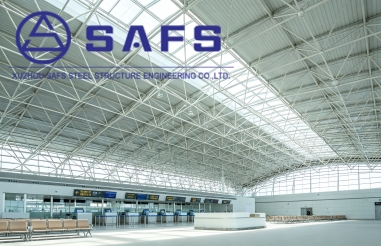
Tanzania‘s aviation infrastructure is undergoing a historic transformation, with the government investing approximately Sh1 trillion in airport construction and upgrades nationwide. At the heart of this expansion is the new Msalato International Airport in Dodoma—a 4E-grade international airport and strategic project under Tanzania‘s 2025 National Development Vision. The facility features a 3.6-kilometer runway measuring 60 meters wide and a passenger terminal capable of handling 1.5 million travelers annually. As of August 2026, the project—backed by the African Development Bank (AfDB) and the Africa Growing Together Fund (AGTF)—has seen its second phase, covering the passenger terminal, control tower, and fire station, reach 75.1% completion. The airport is being constructed by Beijing Construction Engineering Group (BCEG) in collaboration with Sinohydro Corporation Limited. With the government targeting full operations by September 2026, the terminal steel structure represents a critical milestone for the entire project. Beyond Msalato, Tanzania‘s 2026/27 Airport Development Programme includes upgrades at Arusha, Mwanza, Julius Nyerere International, Kigoma, Tabora, Shinyanga, and Sumbawanga airports, alongside the 36.3 billion shilling Musoma Airport expansion now at 70% completion.
The inland location creates significant material supply chain vulnerabilities, making this the primary obstacle to project execution. Dodoma sits far from major port logistics corridors, and local industrial building material production is extremely limited. Aviation-grade space frame profiles, high-precision cladding panels, and specialized sealing components suitable for terminal construction are largely unavailable locally. Delays in material delivery directly impact construction schedules, while substandard alternatives introduce compliance risks that can derail civil aviation acceptance.
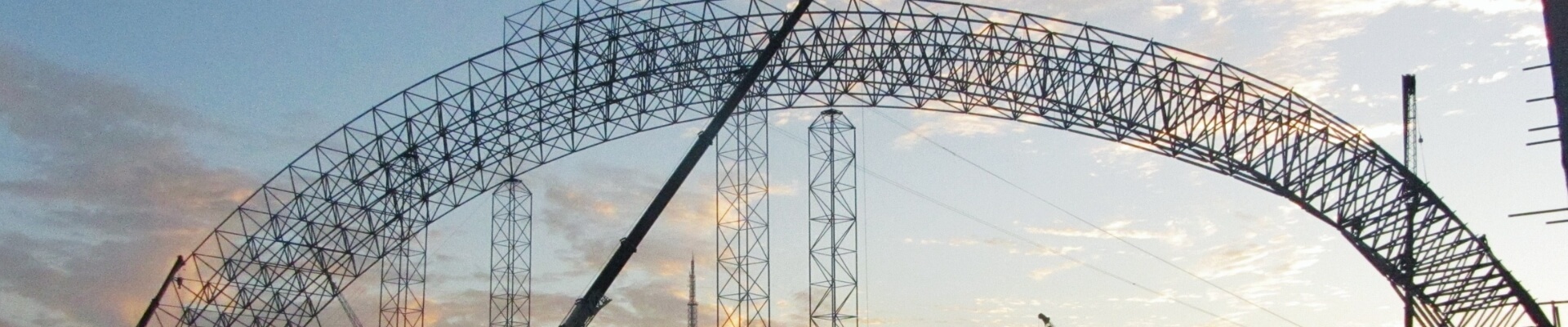
Compounding supply instability is the extreme difficulty of achieving precision in large-span space frame construction. To meet the demands of spacious passenger flow, equipment placement, and open aviation aesthetics, airport terminals typically employ complex spatial space frame structures featuring numerous members, precision node connections, and rigorous overall load transfer logic. On-site assembly is highly sensitive to labor conditions, temperature variations, and environmental factors—frequently resulting in alignment deviations, excessive member deflection, and insufficient node tightening. Even minor precision errors accumulate over time, compromising overall structural load balance and making it difficult to pass stringent civil aviation acceptance standards.
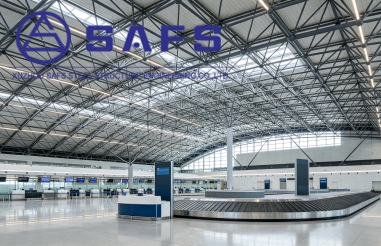
Beyond the demands of high-precision construction, Dodoma‘s tropical highland climate imposes strict requirements on steel structure corrosion protection and weather resistance. The region experiences year-round high temperatures, intense UV radiation, distinct wet-dry seasonal alternation, and significant day-night temperature differentials. Steel structures undergo repeated thermal expansion and contraction that accelerates surface degradation. Inland dust mixed with moisture adheres to component surfaces, creating a continuous micro-corrosive environment. Standard anti-corrosion systems cannot provide long-term protection against weathering and erosion, leading to paint chalking, node rusting, and cladding aging and leakage over time—threatening the safe, continuous operation of the terminal.
Addressing the full range of terminal construction challenges, SAFS Steel Structure delivers specialized solutions that meet civil aviation standards. We establish stable cross-border building material supply channels, selecting civil aviation-certified steel and cladding materials to circumvent local supply chain fragmentation and delivery delays. Through factory-prefabricated modular space frame components, we ensure strict fabrication precision and standardized assembly processes that dramatically reduce on-site construction errors. We apply multi-layer weather-resistant anti-corrosion systems specifically formulated for tropical highland climates, reinforcing the structural, roofing, and cladding systems against aging and corrosion.
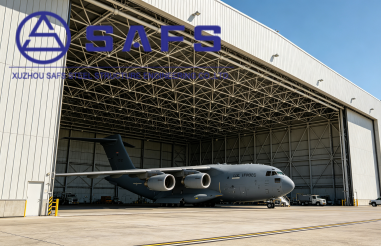
With years of deep cultivation in Tanzanian airport steel structure engineering, SAFS is intimately familiar with Dodoma‘s inland construction conditions and tropical climate characteristics. We focus on the core disciplines of structural optimization, roof profiling, and cladding protection—delivering precision craftsmanship, stable supply systems, and locally adapted solutions that effectively resolve supply chain shortcomings, space frame precision control difficulties, and weak weather resistance. We help airlines and developers build modern terminal steel structure systems that are schedule-reliable, quality-assured, and low-maintenance.
Contact Xuzhou SAFS Steel Structure Engineering Co., Ltd. (SAFS)
Specializing in steel structure engineering, pipe truss engineering, space frame engineering, welded ball space frames, trestle engineering, and related fields.