Dapeng Town Industrial Park, Tongshan District, Xuzhou City, Jiangsu Province, China
The 2027 Africa Cup of Nations (AFCON), co-hosted by Kenya, Tanzania, and Uganda, is driving an unprecedented wave of sports infrastructure construction and upgrades across East Africa—creating a significant new growth track for the steel structure industry. Under the Confederation of African Football (CAF) standardization requirements, competition venues, training grounds, and supporting complexes require large-span, lightweight, and highly durable steel structure systems. SAFS Steel Structure, with deep roots in the East African market, is positioned to capture this construction dividend with professional steel structure solutions, helping venues meet delivery deadlines while seizing regional infrastructure upgrade opportunities.
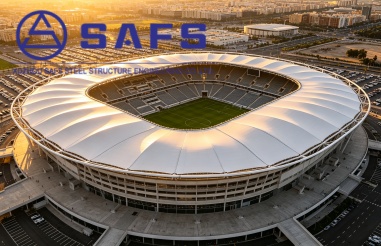
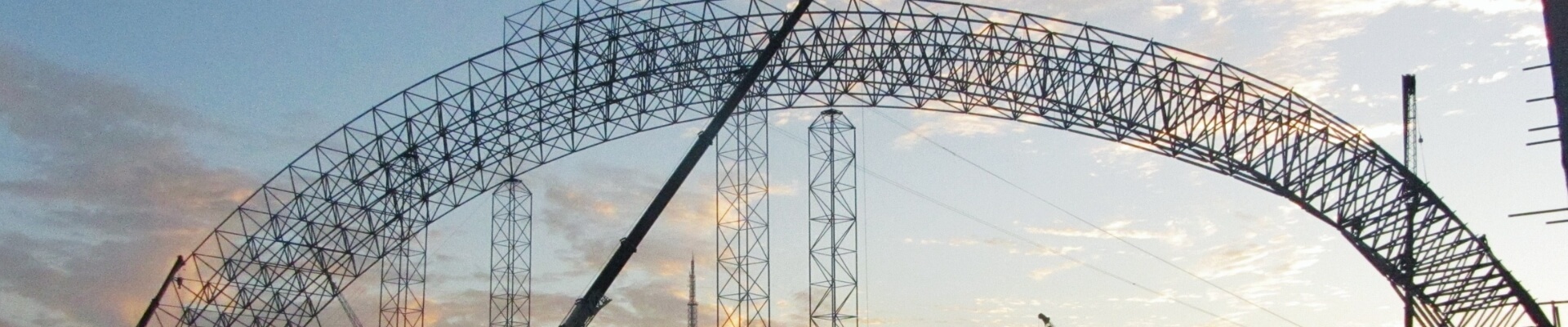
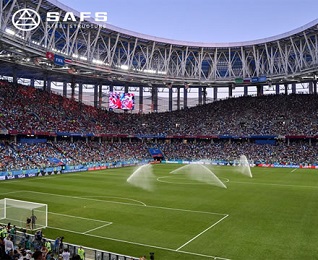
Under CAF regulations, main competition venues, backup venues, and training grounds must meet international standards for high-definition broadcast lighting, large-span spectator spaces, rapid drainage systems, and all-weather event adaptability. With just over a year until kickoff, host nations are racing to complete construction. As of August 2026, Kenya‘s Talanta Stadium (Raila Odinga International Stadium) has reached 94% completion, with the pitch ready, LED screens installed, and 60 of 91 turnstiles in place. Tanzania’s Arusha Integrated Sports Stadium, featuring a single-layer space grid steel structure roof with approximately 8,000 tons of steel, successfully topped out its main steel structure in January 2026 . The Samia Suluhu Hassan Stadium in Arusha has seen its expansive metallic roofing structure largely complete, with the sweeping overhead steel truss system fully covering the seating bowl.
However, challenges remain. A CAF inspection report revealed that as of February 2026, none of Uganda‘s proposed venues fully met Category 4 standards, with Mandela National Stadium requiring partial demolition of the West Stand and roof replacement. Kenya received a formal warning over delays at Talanta Stadium, originally expected by end-2025 but pushed to mid-2026. These gaps underscore the critical need for reliable, fast-track steel structure solutions.
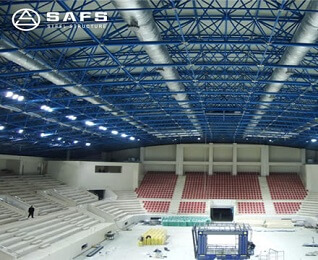
Modern sports venues rely on large-span steel trusses, space frames, and lightweight cladding systems to achieve column-free spectator spaces while meeting seismic, wind resistance, waterproofing, and durability requirements—perfectly suited to East Africa‘s rainy, hot, and high-UV climate. Compared to traditional structures, steel structures offer shorter construction cycles and greater design flexibility, enabling rapid completion of roof upgrades, spectator canopies, and supporting facilities.
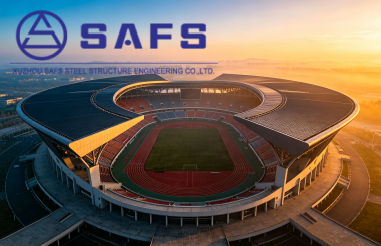
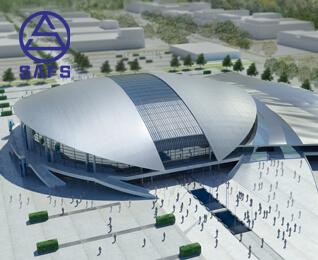
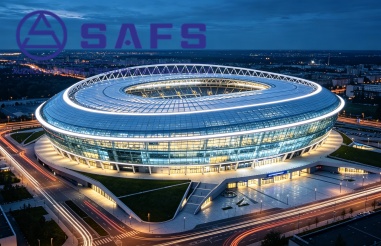
The Arusha Integrated Sports Stadium exemplifies this approach. Covering approximately 41,500 square meters with a capacity of 30,000 spectators, the stadium uses a reinforced concrete frame combined with a single-layer space frame system, with a large-span single-layer space grid steel structure roof consuming approximately 8,000 tons of steel. The Samia Suluhu Hassan Stadium‘s architectural highlight—its expansive metallic roofing structure—is largely complete, with the sweeping overhead steel truss system designed to provide comprehensive shade and weather protection.
Beyond core competition venues, AFCON 2027 is catalyzing broader infrastructure development. Kenya has committed Sh29.4 billion to complete 39 sports stadia nationwide, with Sh26.4 billion designated for sports infrastructure, AFCON preparations, and athlete rewards . Uganda has allocated Shs905 billion in its 2026/2027 budget, including Shs213 billion for road upgrades around Hoima and Mandela stadiums, and Shs56.2 billion for Mandela National Stadium remodeling . Kenya is developing 32 additional sports facilities designed as multipurpose centers with ICT hubs, recording studios, and skyboxes to ensure year-round utilization.
The event, scheduled for June 19 to July 17, 2027, will be the first AFCON held in East Africa and the first co-hosted by three countries. As CAF sets August 2026 as a key inspection milestone, the pressure to deliver world-class venues on time is driving demand for reliable, fast-track steel structure solutions across the region.
As a professional steel structure supplier and engineering service provider with deep roots in Africa, SAFS Steel Structure understands East African construction standards and CAF venue requirements. We offer full-chain services covering large-span venue roofs, spectator stand steel structures, integrated design, prefabrication, and installation for supporting facilities.
Leveraging factory modular prefabrication, we significantly shorten on-site construction cycles to match the accelerated construction pace required for tournament delivery. Our anti-corrosion and anti-aging processes are optimized for East Africa‘s complex climate, ensuring long-term stable venue operations. With standardized tournament-grade engineering quality, localized service capabilities, and an efficient delivery system, SAFS is deeply engaged in Africa‘s sports infrastructure upgrade—helping deliver AFCON 2027 to the highest standards while empowering East Africa‘s urban modernization and opening new horizons in Africa‘s high-end infrastructure market.
Contact Xuzhou SAFS Steel Structure Engineering Co., Ltd. (SAFS)
Specializing in steel structure engineering, pipe truss engineering, space frame engineering, welded ball space frames, trestle engineering, and related fields.