
Dapeng Town Industrial Park, Tongshan District, Xuzhou City, Jiangsu Province, China
Contractors undertaking aircraft hangar projects at Tanzania‘s expanding airports face specialized challenges in aviation-grade steel structure construction. As critical facilities for aircraft parking, maintenance, and overhaul, hangars demand structural safety, wind resistance, and long-term corrosion protection standards far exceeding ordinary buildings. Local working conditions combined with strict industry regulations create difficulties throughout project execution—frequently affecting acceptance and long-term operational safety.
Tanzania‘s aviation sector is undergoing a historic expansion. The Msalato International Airport in Dodoma—a 4E-grade facility featuring a 3.6 km runway and capacity for 1.5 million passengers annually—is on track for passenger operations by September 2026, with its passenger terminal, control tower, and fire station reaching 75.1% completion . Beyond Msalato, the Shinyanga Airport (TZS 44.8 billion rehabilitation) will open by September 2026, and the Musoma Airport (TZS 35 billion upgrade) commenced commercial flights in July 2026 . These projects signal sustained demand for specialized hangar steel structures across the country.
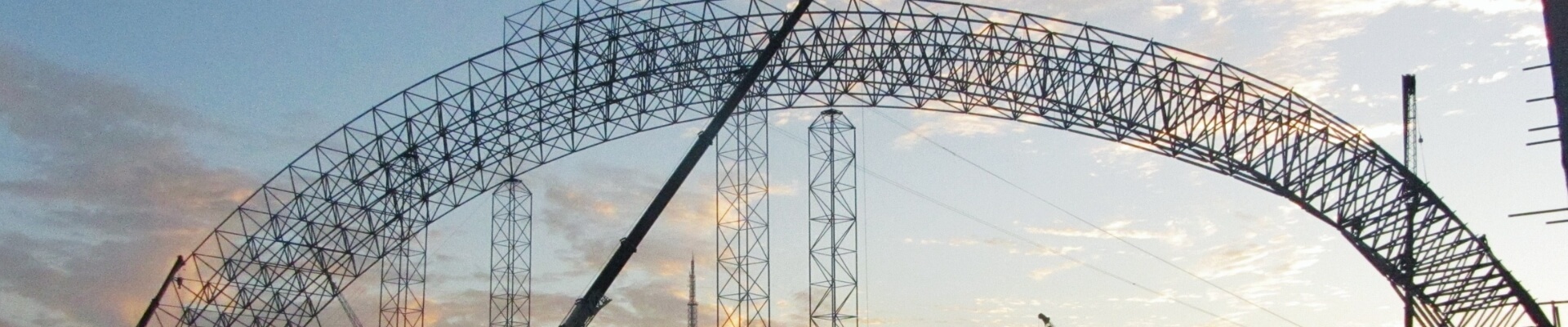
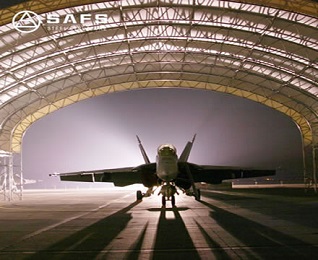
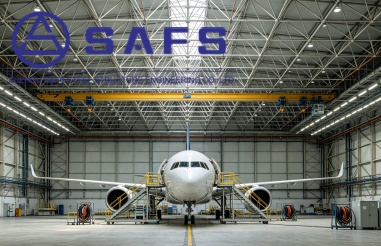
The requirement for unobstructed hangar space to accommodate aircraft entry/exit and maintenance creates significant technical challenges. Hangars require column-free layouts with large spans, complex member forces, and precise load transfer. Local construction techniques often fail to meet aviation standards, resulting in insufficient assembly precision, unbalanced load distribution, roof deformation, and member stress concentrations—creating hidden structural safety risks and failing aviation safety compliance.
Advanced techniques developed for super-large-span hangar projects—such as modular assembly and phased cumulative synchronous lifting—have successfully addressed these challenges in complex projects . For twin large-span hangars on soft foundations, partial reinforcement of gate trusses combined with non-temporary-support lifting eliminated the need for temporary towers . As the world‘s largest single-span maintenance hangar (spanning 269.5 meters) demonstrates, modern steel technology makes long-span designs achievable even under demanding conditions .
Large-span hangar roofs, combined with Tanzania’s open terrain and frequent land-sea wind gusts, create extreme wind uplift and pressure conditions on roof structures. Standard roof fixing methods and simple cladding systems lack sufficient wind resistance, leading to panel loosening, seam tearing, and member deformation under strong winds—compromising roof integrity and hangar door operation, directly affecting aircraft parking and maintenance.
For demanding environments, facilities in hurricane and seismic zones are engineered with enhanced structural resilience . Value-engineered designs with optimized wind-load performance can achieve substantial material savings—one UK hangar project saved 15% on steelwork and 33% on foundations through careful optimization .
Tanzania‘s tropical climate creates continuous corrosion pressure on steel structures throughout their service life. High temperatures, intense UV radiation, humidity, and dust create persistent compound erosion. Standard protection systems fail against UV and moisture, leading to paint chalking, node rusting, and panel cracking. As mission-critical aviation facilities cannot afford frequent maintenance shutdowns, corrosion resistance directly impacts lifecycle costs and service life.
Projects in Tanzania‘s coastal and semi-arid regions have successfully addressed this challenge using hot-dip galvanized steel components, achieving effective corrosion resistance under harsh conditions . For hangars, specifying appropriate corrosion protection systems is essential for long-term durability .
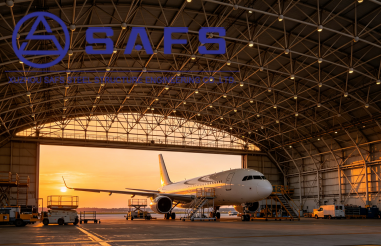
Drawing on extensive East African aviation project experience, SAFS Steel Structure delivers professional, adaptable solutions for hangar construction:
Large-span structural optimization: Precision engineering balances load distribution across column-free spaces, meeting aircraft maintenance requirements
Wind-resistant roof systems: Enhanced fixing nodes and cladding connections based on local wind data to resist gust impact
Aviation-grade corrosion protection: Multi-layer systems formulated for tropical heat, humidity, and UV exposure to prevent aging and rusting
With deep cultivation in Tanzania‘s aviation infrastructure sector, SAFS combines precision factory prefabrication, locally adapted design, and standardized on-site assembly—solving the core challenges of large-span construction, wind resistance, and corrosion protection. We help contractors deliver safe, compliant, low-maintenance, long-life hangar facilities.
Contact Xuzhou SAFS Steel Structure Engineering Co., Ltd. (SAFS)
Specializing in steel structure engineering, pipe truss engineering, space frame engineering, welded ball space frames, trestle engineering, and related fields.