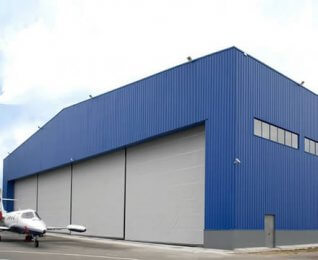
Dapeng Town Industrial Park, Tongshan District, Xuzhou City, Jiangsu Province, China
The construction of industrial buildings is flourishing in coastal regions across Southeast Asia and indeed globally. However, the unique natural environment of these areas—characterised by high temperatures, humidity, intense ultraviolet radiation, high salt spray levels, and frequent monsoons—poses significant challenges for steel-framed structures. Corrosion stands as the foremost threat to coastal steel structures, not only compromising aesthetics but also severely undermining structural integrity. As an enterprise dedicated to providing premium, safe, and robust steel structure designs and products while maintaining a steadfast commitment to environmental sustainability, we recognise that selecting appropriate structural forms and implementing effective anti-corrosion measures are paramount to ensuring the enduring durability of coastal steel-framed industrial buildings.
The primary steel structures employed in industrial buildings comprise portal frames, trusses, and space frames. Each configuration possesses distinct characteristics, with their respective advantages and disadvantages becoming more pronounced in coastal environments.
Characteristics: A framework composed of solid or lattice steel columns and beams connected rigidly, featuring a simple structure.
Characteristics: A lattice structure formed by connecting members at their ends, achieving large-span load-bearing through triangular stability.
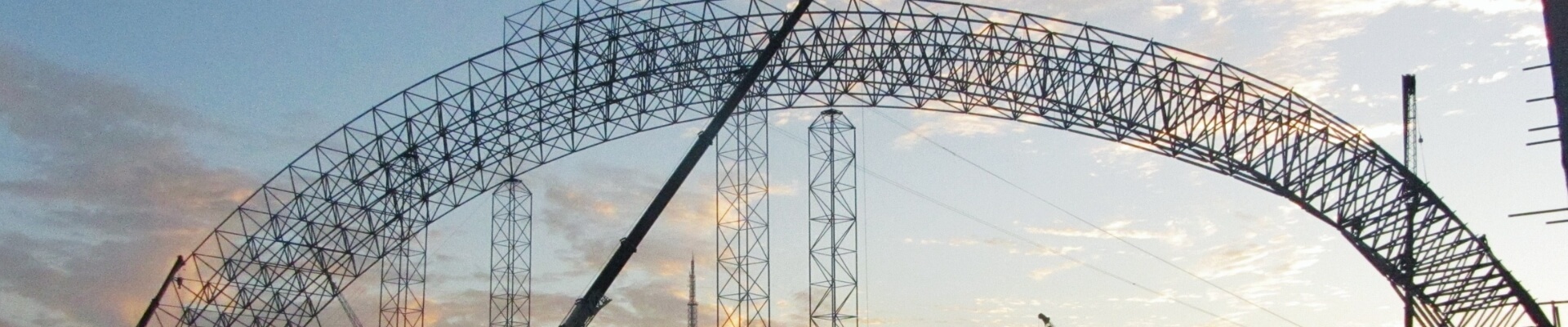
Characteristics: A spatial grid structure formed by connecting multiple members through nodes, with members arranged in an intersecting pattern to create a three-dimensional load-bearing system.
Achieving extraordinary spans with unparalleled spatial flexibility: Space frame structures effortlessly span tens or even hundreds of metres, delivering column-free or minimally-supported interiors for industrial buildings. This proves crucial for coastal facilities requiring expansive, unobstructed spaces – such as logistics warehouses and large-scale equipment production plants – significantly enhancing site utilisation and production efficiency.
Lightweight and efficient with reduced steel consumption: Through rational spatial load distribution, space frame structures evenly disperse loads, achieving low self-weight and economical steel usage. This not only reduces foundation costs but also minimises natural resource consumption, aligning with green and environmentally conscious principles.
High overall rigidity with outstanding wind and seismic resistance: As a three-dimensional spatial load-bearing system, space frame structures possess exceptional overall rigidity and stability. This enables them to effectively withstand the strong wind loads common in coastal regions and exhibit excellent ductility and energy dissipation capabilities during seismic events, providing superior safety assurance for industrial buildings. They are particularly well-suited to windy coastal environments.
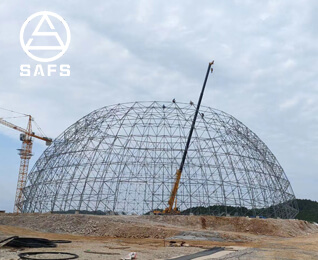
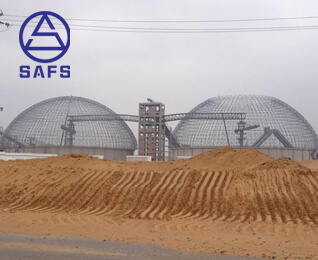
Flexible Form and High Aesthetic Value: Space frame structures can be designed in various forms such as flat plates, spherical shells, or cones, accommodating complex floor plans and roof configurations. Their distinctive spatial grid patterns impart a contemporary aesthetic to industrial buildings, enhancing corporate image.
Industrialised Production and Streamlined Construction: Space frame components undergo highly standardised prefabrication in factories, followed by on-site assembly at elevated or ground levels before being lifted into position as a unified structure. This efficient construction model significantly shortens project timelines and mitigates construction risks, proving particularly advantageous for coastal regions where weather conditions may impact on-site works.
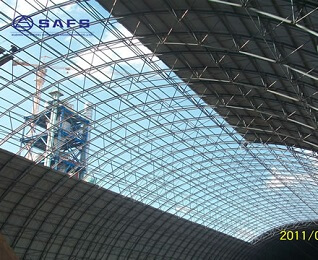
Optimal natural lighting and ventilation: The open nature of space frame structures provides ample natural light and ventilation within the building. This reduces reliance on artificial lighting and air conditioning, thereby lowering operational energy consumption. It further embodies green and environmentally conscious principles while helping mitigate high temperatures and humidity in coastal areas.
In the face of the harsh corrosive environment along the coastline, a single anti-corrosion measure is often insufficient to provide long-term protection. We recommend adopting a ‘dual protection system’ combining hot-dip galvanising with heavy-duty anti-corrosion coatings to achieve optimal anti-corrosion performance and cost-effectiveness throughout the entire lifecycle.
First Line of Defence: Hot-Dip Galvanising – Deep Protection via Sacrificial Anodes
In coastal environments with high salt spray exposure, hot-dip galvanising delivers a fundamental corrosion protection lifespan of 20 to 50 years or longer, forming an effective barrier against chloride ion attack. All primary steel structural components, such as columns, beams, purlins, and supports, should undergo hot-dip galvanisation.
Second Line of Defence: Heavy-Duty Anti-Corrosion Coatings — Multi-Layer Barriers and Tailored Protection
A high-performance heavy-duty anti-corrosion coating system is applied over the hot-dip galvanised layer. This typically comprises:
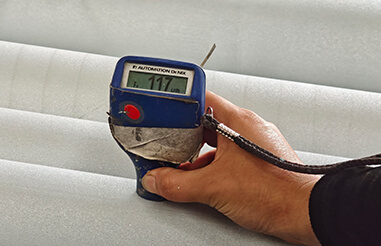
Epoxy zinc-rich primer: Further enhances sacrificial anode protection while delivering superior adhesion.
Epoxy micaceous iron oxide intermediate: Forms a dense physical barrier to impede moisture and corrosive medium penetration.
Polyurethane or fluorocarbon topcoat: Provides outstanding weather resistance, UV protection, and colour retention, available in various hues as required.
Heavy-duty anti-corrosion coatings effectively resist ultraviolet radiation and chemical erosion, synergising with hot-dip galvanised layers to extend overall protective lifespan to over 50 years. Their customisability also enables adaptation to specific corrosive environments within industrial premises.
This combination not only extends protective longevity and reduces subsequent maintenance costs, but more importantly, it provides unparalleled safety and robustness for coastal steel structures, ensuring your assets continue to operate efficiently even in harsh environments.
When constructing steel structures in coastal regions, selecting space frame structures delivers exceptional performance through ultra-large spans, high rigidity, and lightweight efficiency, making them particularly suited to withstand coastal gale-force winds. Concurrently, the dual-protection system combining hot-dip galvanising with heavy-duty anti-corrosion coatings is pivotal in ensuring the long-term durability of steel structures against salt spray erosion.