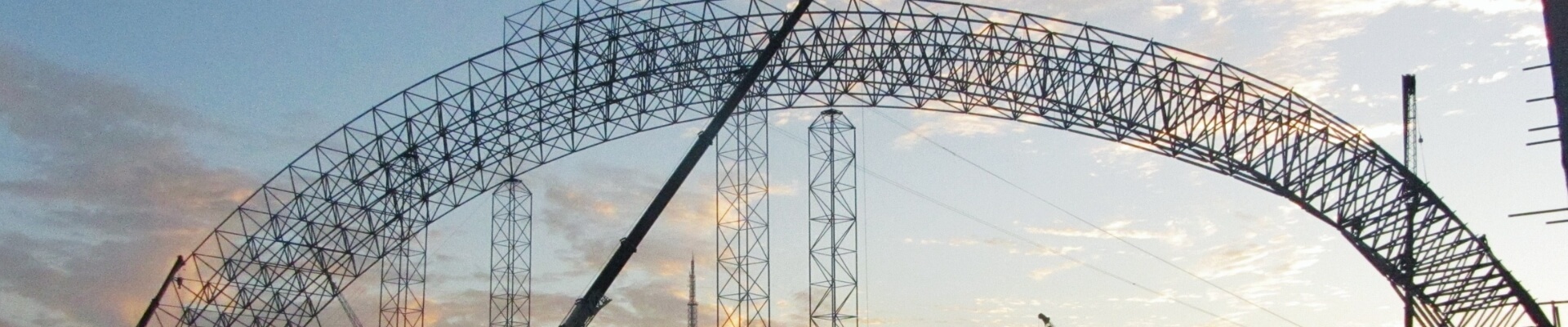
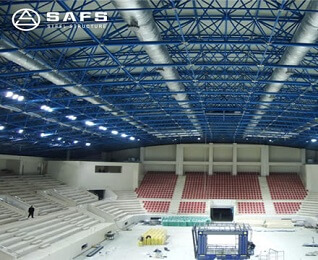
The main loads of the grid steel structure are divided into three types, namely functional load, permanent load and variable load.
Generally speaking, the load includes the weight of the grid shell structure, the weight of the roof maintenance structure, the load of the suspended equipment pipe and the ladder load. For the storage hopper, there are four main types of variable loads, namely roof load, snow load, wind pressure and dust load. So how is the load of the grid steel structure calculated?
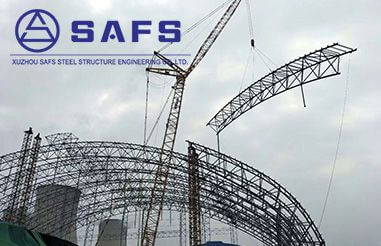
- The dust load of the grid steel structure is a load that must be considered in the construction and metallurgical industries. This is unified throughout the country, about 0.5KN/m2 or LOKN/m2. However, if it is in a power plant or a coal enterprise, the working environment of the grid steel structure of the coal storage yard inside is relatively good, and the dust load does not need to be considered. In addition, the slightly larger loads in the snow load or roof load should be considered together with the dust load.
- Snow load is also a key load of grid steel structure. Snow load is a relatively sensitive load for structures with large spans. In many countries, grid steel structure collapses in heavy snow. Snow load must be considered in cold areas with snow, and the uniform, uneven and semi-uniform distribution of the roof should also be considered.
- There are three main reasons that affect the distribution of snow load on the roof, namely wind factors, roof shape and roof inclination factors. Unevenly distributed snow loads in grid steel structures generally have control effects. In the requirements, snow loads are generally considered together with dust loads.