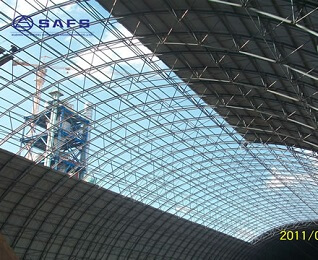
Dapeng Town Industrial Park, Tongshan District, Xuzhou City, Jiangsu Province, China
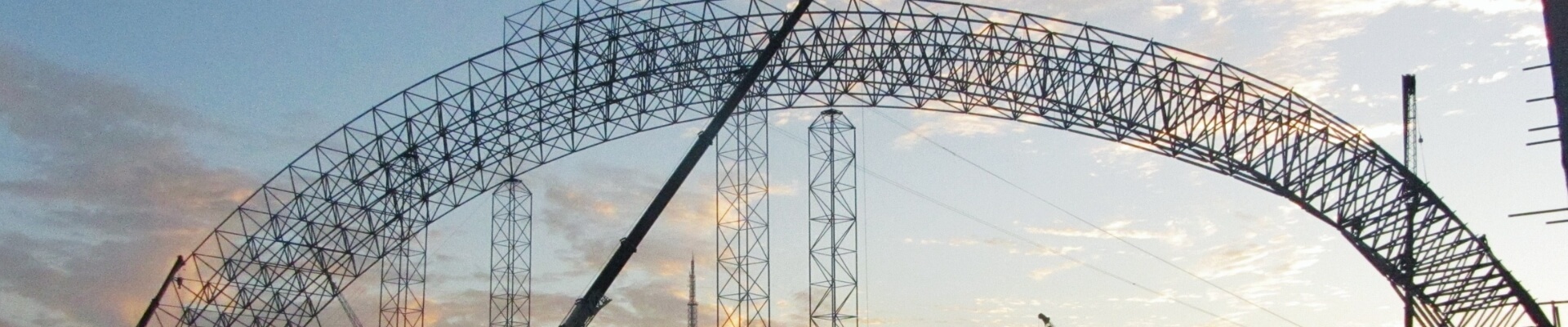
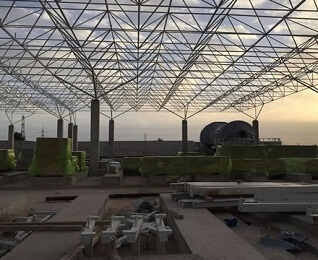
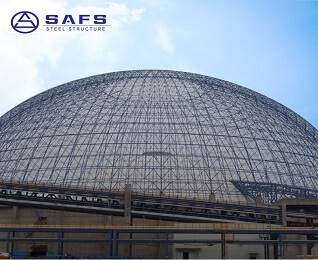
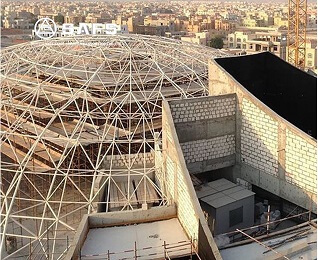
The node of a tubular truss represents its core advantage and is the key reason it has become the primary choice for large-span spatial structures.
The advantages of tubular truss nodes can be summarized as follows:
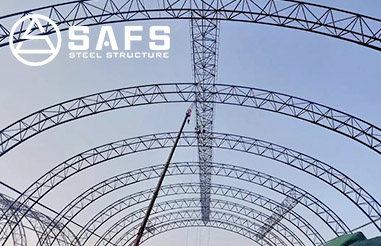
Continuous force flow transmission: Unlike conventional trusses using angle steel and bolted connections, tubular truss nodes typically involve direct welding of branch tubes (chords) to main tubes (chords). This “intersecting welding” enables smooth force transfer from one member to another, eliminating stress concentrations caused by bolt holes and gusset plates in traditional nodes.
Superior Fatigue Resistance: Minimal stress concentration and high fatigue strength at joints make tubular trusses particularly suitable for structures subjected to dynamic loads, such as stadiums and bridges.
High Rigidity and Low Deformation: The overall welded joints provide greater structural rigidity, enhancing the stability of the entire truss system and minimizing deformation under load.
Visual Purity: The structural lines of tubular trusses are exceptionally fluid and clean-cut. This offers a significant advantage for modern architecture pursuing aesthetic expression, particularly where exposed structures convey “technical beauty” (e.g., airport terminals, stadiums, exhibition centers).
Structure as Architecture: The tubular truss itself can serve as the building’s final visual expression, eliminating the need for additional decoration and achieving a high degree of unity between structural integrity and architectural aesthetics.
Although the cutting and welding of intersecting joints demand high technical precision, the overall economic benefits are highly prominent.
Steel Savings: Direct intersecting welding eliminates numerous connecting components like gusset plates, angle steel, and bolts, typically reducing steel consumption by 15%-20%.
Simplified Construction: Streamlined node design also decreases both factory fabrication and on-site installation workloads.
Strong Spatial Performance: Pipe trusses, especially triangular-section three-dimensional trusses, inherently form highly statically indeterminate spatial structures. Welded joints further enhance this integrity, enabling superior spatial synergy and effective resistance to loads from all directions.
Superior Section Properties: Steel pipes feature centrally symmetric sections with identical moments of inertia in all directions. Their excellent compression and torsion resistance make them ideal for load-bearing truss members.