Dapeng Town Industrial Park, Tongshan District, Xuzhou City, Jiangsu Province, China
As society rapidly develops, industries across the board require space for growth, and many sectors face housing shortages. In this context, developers increasingly favor constructing prefabricated houses, while clients prefer them due to the unique advantages of steel structure prefabricated housing.
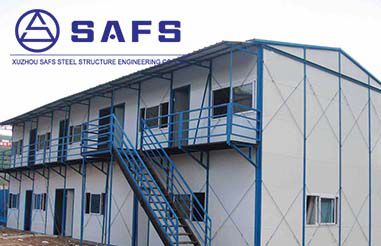
Steel-framed prefabricated buildings utilize steel structures as their framework, with interior and exterior walls made of colored steel panels. Construction cycles are relatively short because the steel structure is assembled from prefabricated components manufactured in factories. These components are transported to the construction site and connected via welding and bolting. The construction process is relatively straightforward and fast, significantly reducing development timelines. Based on steel structure project experience, constructing a two-story, five-unit steel structure building takes only one month, whereas a traditional concrete structure requires four to five months. Steel structure prefabricated housing involves relatively lower construction investment, avoiding capital chain disruptions and delivering favorable economic benefits.
Steel-framed modular buildings are energy-efficient structures with minimal environmental impact, helping preserve our natural environment. Color-coated steel structures and prefabricated houses utilize steel frameworks. Prefabricated houses are lightweight, require less land use, generate relatively small amounts of construction waste, and cause lower environmental pollution. Steel buildings have a long service life and mature technology, reducing material consumption while allowing for recycling during use. Steel trailers used for dry construction consume less water, resulting in a relatively smaller environmental footprint.
Steel-structured prefabricated buildings offer relatively high space utilization. Without the column structures typical of traditional load-bearing systems, their interiors feature greater transparency and improved lighting efficiency. Additionally, clients can customize and utilize the space according to their specific needs. Statistics indicate that the usable area of steel-structured prefabricated buildings increases by approximately 7% compared to traditional concrete structures.