

Dapeng Town Industrial Park, Tongshan District, Xuzhou City, Jiangsu Province, China
Constructing steel-framed industrial warehouses along the Baltic coast presents dual challenges: extreme cold and coastal exposure. Successful projects demand not only robust structural design but also comprehensive consideration of insulation, corrosion protection, and construction techniques.
The Baltic coastal region experiences long, harsh winters, making this a priority consideration in design.
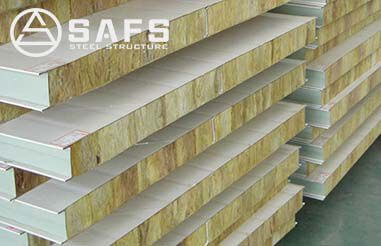
Superior Insulation: This is critical for maintaining interior temperatures and reducing operational energy consumption. Walls and roofs should utilize sufficiently thick high-performance composite panels (sandwich panels) filled with insulation materials like rock wool. Doors, windows, vents, and other openings require strict sealing to prevent thermal bridging and heat loss.
Heavy Snow Loads: Russian building codes impose stringent requirements for roof snow loads. Roof designs must withstand the pressure of heavy snow accumulation, typically requiring steeper slopes to facilitate snow shedding and reinforced load-bearing capacity of roof purlins and main steel beams.
Low-Temperature Steel Grades: Certain steel grades become brittle and lose toughness in extreme cold. Select steel grades suitable for low-temperature environments to ensure structural safety and reliability during severe winters.
Although the Baltic Sea is a freshwater sea, its coastal air—high in humidity and salt content—remains corrosive to steel structures.
Dual Corrosion Protection System: This represents the optimal solution for coastal environments. All steel structural components should undergo hot-dip galvanization to form a long-lasting sacrificial anode protective layer. Building upon this foundation, apply heavy-duty anti-corrosion coatings (e.g., epoxy zinc-rich primer + epoxy micaceous iron oxide intermediate coat + polyurethane topcoat) to create a dual physical and chemical barrier, effectively resisting moisture and salt spray erosion.
Rigorous Waterproofing: Waterproofing for roofs, walls, and foundations is critical. High-quality waterproofing membranes and sealants must be used, particularly at vulnerable points like ridges, gutters, and roof penetrations, to ensure no leaks and prevent water accumulation corrosion.
Although the Baltic Sea is a freshwater sea, its coastal air—high in humidity and salt content—remains corrosive to steel structures.
Dual Corrosion Protection System: This represents the optimal solution for coastal environments. All steel structural components should undergo hot-dip galvanization to form a long-lasting sacrificial anode protective layer. Building upon this foundation, apply heavy-duty anti-corrosion coatings (e.g., epoxy zinc-rich primer + epoxy micaceous iron oxide intermediate coat + polyurethane topcoat) to create a dual physical and chemical barrier, effectively resisting moisture and salt spray erosion.
Rigorous Waterproofing: Waterproofing for roofs, walls, and foundations is critical. High-quality waterproofing membranes and sealants must be used, particularly at vulnerable points like ridges, gutters, and roof penetrations, to ensure no leaks and prevent water accumulation corrosion.
In summary, the core challenge in constructing steel-structured warehouses along the Baltic coast lies in seamlessly integrating the thermal insulation and load-bearing requirements of severe cold climates with the corrosion resistance and waterproofing demands of coastal environments.