
Dapeng Town Industrial Park, Tongshan District, Xuzhou City, Jiangsu Province, China
An airport terminal is a city‘s first impression and its most heavily trafficked public building. As aviation demand grows, many airports enter expansion cycles—and how to accommodate larger passenger volumes within constrained existing footprints becomes a question designers must answer. Terminals are unlike ordinary buildings: they must hold people, and they must withstand the daily circulation of tens of thousands.
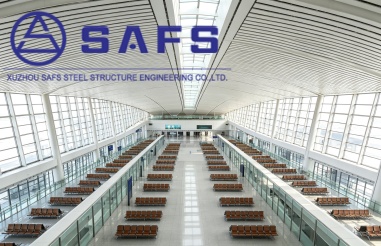
Check-in, security, waiting, and baggage claim all require continuous, open floor areas. Dense columns fragment passenger flow, obstruct equipment layout, and make spaces feel cramped. Open clear heights affect not only visual impression but directly impact passenger circulation and peak-hour flow management—and determine whether the hall can comfortably accommodate self-service kiosks, baggage systems, and commercial facilities.
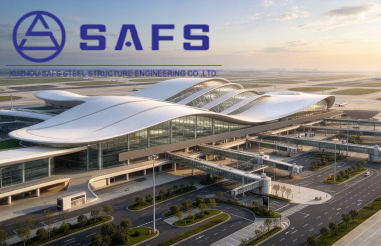
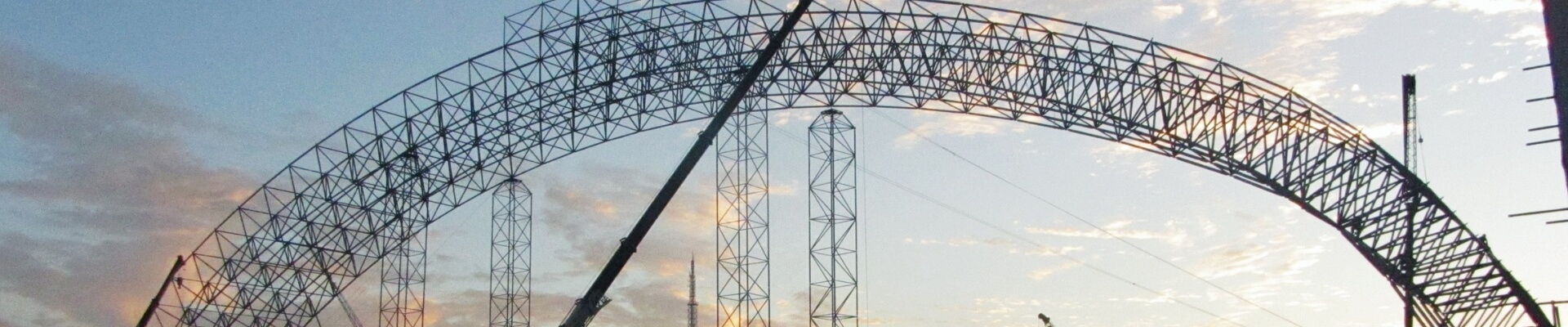
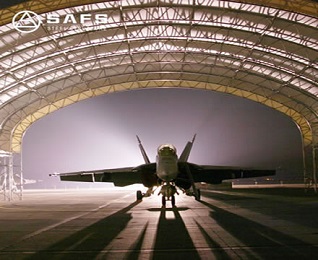
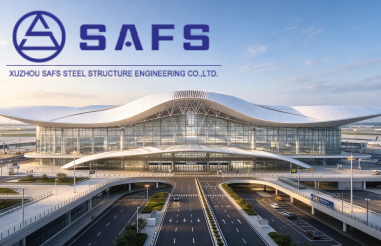
Steel structures offer inherent advantages in such spaces. Lightweight and high-strength, they can cover large roof areas with fewer supports, keeping terminal interiors continuous. Roofs can integrate truss or space grid systems, balancing span and architectural form while leaving room for skylights, HVAC outlets, and maintenance access—allowing structure and architectural expression to reinforce each other rather than compromise.
Global projects demonstrate the scale achievable. CSCEC‘s Zhuhai Airport Terminal 2 features a steel grid roof spanning over 65,000 square meters and weighing approximately 6,120 tonnes, with a variable-curvature hyperbolic wave stretching more than 300 meters east to west. Shanghai Pudong Airport T3’s international main terminal roof involves 202,000 tonnes of steel—five times the steel used in the Burj Khalifa—with a single lift covering 25,000 square meters and 6,000 tonnes. Nicaragua‘s Punta Huete Airport lifted an 8,000-square-meter, 360-tonne steel grid into place with millimeter precision. These benchmarks confirm that large-span steel roofs are not theoretical—they are proven, repeatable engineering.
The value of column-free space also lies in functional elasticity. Airlines adjusting counters, security adding lanes, baggage systems upgrading—all can be accomplished within open spaces without being constrained by structural layout. Airport operational cycles are long, and expansion and renovation are nearly inevitable. This adaptability often matters more than initial aesthetics, and it saves the cost of repeated demolition and reconstruction.
Expansion projects typically must proceed without suspending airport operations. Factory prefabrication, segmented transport, and on-site assembly compress on-site work time and reduce interference with normal operations. Night-time lifting and phased handovers are also more feasible because steel components are lightweight and assembly-oriented. Modular steel assembly for airport terminals has been shown to reduce on-site labor by 32–35%, with fabrication tolerances held within ±0.5mm in controlled factory environments.
Africa‘s airport expansion wave underscores this demand. Kenya signed a Ksh154.2 billion contract with China Road and Bridge Corporation for the JKIA Modernization Project, expanding Nairobi‘s capacity from 7.5 million to 22 million passengers annually. Nigeria‘s $500 million Murtala Muhammed International Airport upgrade, awarded to CCECC, involves stripping Terminal 1 to its structural frame and expanding Terminal 2. Ethiopia‘s Bishoftu International Airport—Africa‘s largest aviation infrastructure project—will feature a 660,000-square-meter terminal for 60 million passengers in its first phase, with a modular concrete-and-steel structure. These projects require large-span steel solutions delivered on accelerated timelines.
SAFS Steel Structure is familiar with large-span public buildings such as airport terminals. We provide adaptable steel structure solutions aligned with expansion requirements, delivering complete services from detailed design and component fabrication to on-site support—ensuring large-span roofs land smoothly within existing sites. We welcome inquiries on specific projects to explore the steel structure solution best suited to your needs.
Contact Xuzhou SAFS Steel Structure Engineering Co., Ltd. (SAFS)
Specializing in steel structure engineering, pipe truss engineering, space frame engineering, welded ball space frames, trestle engineering, and related fields.