
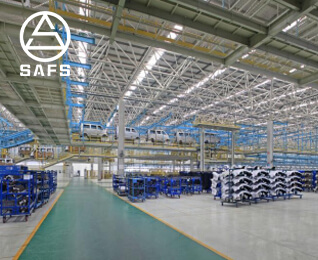
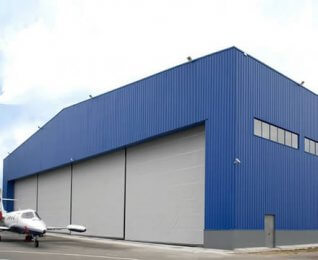
Dapeng Town Industrial Park, Tongshan District, Xuzhou City, Jiangsu Province, China
Vietnam’s manufacturing sector welcomes a historic policy easing in 2026. The new Investment Law, effective March 1, 2026, signals a fundamental shift from “strict entry” to “looser entry with stronger post-approval supervision” — projects requiring central government approval have been slashed from 38 categories to just 12, and provincial approval timelines are legally capped at 20 working days. The revised Construction Law, taking effect July 1, 2026, further introduces digital submissions and expanded construction permit exemptions, expected to cut approval times by over 30%.
Foreign direct investment is surging across Vietnam. POSCO Future M is investing over US$400 million to build its first overseas cathode materials plant in Thai Nguyen; and FDI in technology parks grew 18% in the first half of 2026, with semiconductors, biotechnology, and EV components emerging as key investment priorities.
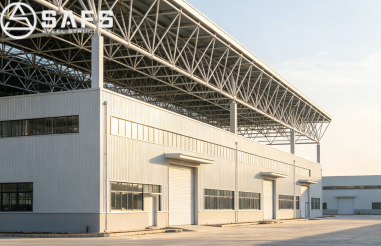
Vietnam’s heavy rainfall and extreme weather remain unavoidable challenges for factory construction. In May 2026, the Hanoi Department of Construction issued an urgent directive requiring all construction projects to reinforce safety measures during the rainy season. Traditional steel-structured factories are highly vulnerable to roof ponding, deformation, and leakage under sustained downpours, while high humidity accelerates wall dampness and mold growth — directly undermining product quality and operational efficiency. Environmental and climate adaptation requirements are tightening, and ESG standards have become a prerequisite for multinationals when selecting factory locations.
Cost pressures are another defining challenge for 2026. Construction steel prices remain highly volatile — Vietnam saw a 50% surge within six months in 2021, and large steel structure contracts now commonly include CPI-based price adjustment clauses. Diesel prices rose more than 10% in Q1 2026, pushing fuel’s share of operating costs from 12-15% to nearly 20%, while steel, cement, and concrete prices have climbed 20-40%. Poor space utilization and inadequate construction quality management lead to high long-term maintenance costs and difficult retrofitting — issues that seriously constrain long-term business operations.
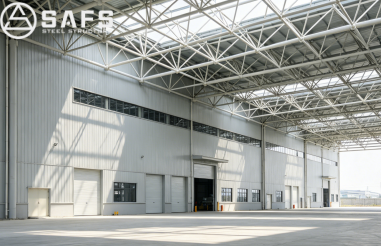
When factory construction challenges mount, a reliable and experienced contractor is the key to breaking through. SAFS Steel Structure has been deeply rooted in Vietnam’s factory construction industry for many years, with keen insight into the latest policy shifts under the 2026 Investment Law and Construction Law. Leveraging pre-engineered steel building systems to mitigate cost volatility, SAFS provides turnkey factory construction solutions — from site selection and compliance approval through construction and delivery — ensuring fast, legal, and worry-free project completion for factory owners in Vietnam.