Dapeng Town Industrial Park, Tongshan District, Xuzhou City, Jiangsu Province, China
Amid the roaring acoustics of a stadium, the tranquil interplay of light within a museum, and the expansive, open atrium of a shopping mall, one common element silently supports these extraordinary experiences: the large-span steel structure roof. This is no longer merely a “roof” that covers a space, but the spatial skeleton that defines the form, function, and commercial value of modern civil architecture.
From Structural Liberation to Functional Revolution
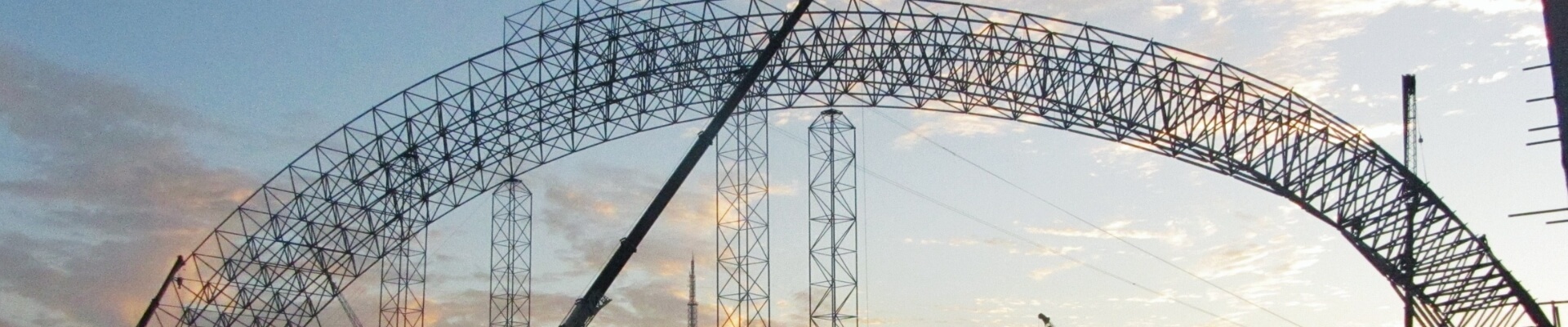
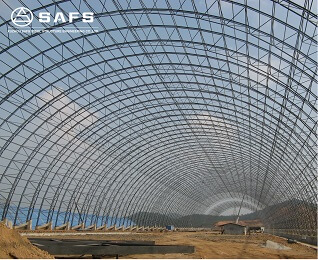
Traditional architecture has long been constrained by the physical divisions of beams and columns, resulting in spaces that are compartmentalized and rigid. Steel large-span roofs—such as grid structures, cable-membrane systems, and arches—leverage high strength-to-weight ratios to achieve column-free spans of tens or even hundreds of meters. This liberation brings about a fundamental transformation:
In stadiums, it eliminates visual obstructions, ensuring spectators in every corner enjoy an unobstructed view of the event. Simultaneously, the vast column-free space offers absolute flexibility for multi-purpose use—concerts, exhibitions, and more—dramatically increasing venue utilization and operational revenue.
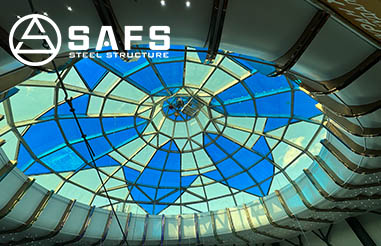
In museums, it creates continuous, uninterrupted exhibition walls and open interior plazas, allowing curators the freedom to craft grand narratives. Natural light can be introduced through strategically designed skylights, protecting artifacts while casting dramatic, time-varying shadows, making the building itself a work of art.
In malls, it enables the construction of magnificent atriums and fluid circulation paths, guiding foot traffic and creating a comfortable sense of scale and exploration. These expansive public spaces become social hubs for events and interactive installations, transforming shopping from a transactional activity into an immersive lifestyle experience.
A Symphony of Speed and Economy
The high degree of prefabrication in steel structure roofs makes construction akin to “assembling building blocks,” offering speed increases of 30% to 50% compared to traditional concrete structures. For civil architecture projects, this translates into:
Earlier openings and faster ROI: Malls and stadiums can begin operations sooner, seizing market opportunities and generating cash flow.
Reduced disruption: In bustling urban areas or renovation projects, rapid and quiet installation minimizes impact on surrounding businesses and communities.
Large-span steel structures also grant unprecedented morphological expression to architecture. From the woven texture of the Bird’s Nest in Beijing to the bubble-like structure of the Water Cube, and the sweeping curves of regional cultural centers, steel allows architects to break free from the constraints of gravity and bring their visions to life. It elevates buildings from mere “boxes” into urban landmarks and cultural symbols, possessing inherent power for brand communication and visitor attraction.
The lightweight nature of steel reduces foundation loads and conserves materials, while prefabrication minimizes on-site waste. More importantly, large-span spaces offer inherent future adaptability. Internal layouts can be easily reconfigured as needs change, significantly extending the building’s lifecycle. This represents a forward-thinking, resource-efficient approach to sustainability.
Therefore, choosing a large-span steel structure roof is far more than a mere technical decision. It is a fundamental reconsideration of architecture’s core mission—evolving from “creating shelter” to “crafting unforgettable spatial experiences.” By liberating space, accelerating construction, and inspiring aesthetics, it directly empowers a building’s operational vitality, cultural value, and commercial success. Ultimately, it places the people within—whether they are spectators, visitors, or shoppers—as the true protagonists of the space. This is the deepest pursuit of modern civil architecture.