Dapeng Town Industrial Park, Tongshan District, Xuzhou City, Jiangsu Province, China
Africa‘s clean energy construction is accelerating, with a large number of new-build and expansion hydropower projects advancing across the continent. The main powerhouse—as the core production area—houses turbine-generator units, lifting equipment, and electrical control systems, demanding stringent standards for spatial openness, structural load capacity, and installation adaptability. Traditional building structures suffer from limited spans and fragmented spaces, making it difficult to accommodate large hydropower equipment hoisting, placement, and routine maintenance. SAFS Steel Structure, with deep cultivation in Africa‘s hydropower infrastructure sector, focuses on optimizing powerhouse large-span structures and equipment adaptation design—delivering practical, highly adaptable steel structure solutions that help partners efficiently advance hydropower plant construction and ensure stable equipment commissioning.
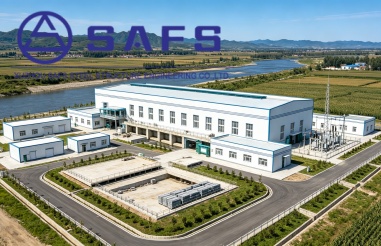
Africa‘s hydropower sector is experiencing a historic wave of project completions and new investments. Tanzania’s 2,115 MW Julius Nyerere Hydropower Plant was officially inaugurated in August 2026, now accounting for nearly half of Tanzania‘s national grid electricity supply. Built with the participation of PowerChina and Dongfang Electric, the nine-unit facility represents one of Africa’s largest hydropower projects, with the main dam, water conveyance system, and powerhouse constructed under rigorous engineering standards. In the DRC, the 132 MW Portes de l‘Enfer hydropower project has been expanded from an initial 36 MW design, while the 250 MW Inkisi project is being revived with a 36-month construction timeline. Additional projects across Cameroon (Nachtigal Falls 420MW), Ethiopia (Koysha 1,800MW), and Mozambique (Mphanda Nkuwa 1,500MW) are advancing, creating sustained demand for specialized hydropower steel structures.
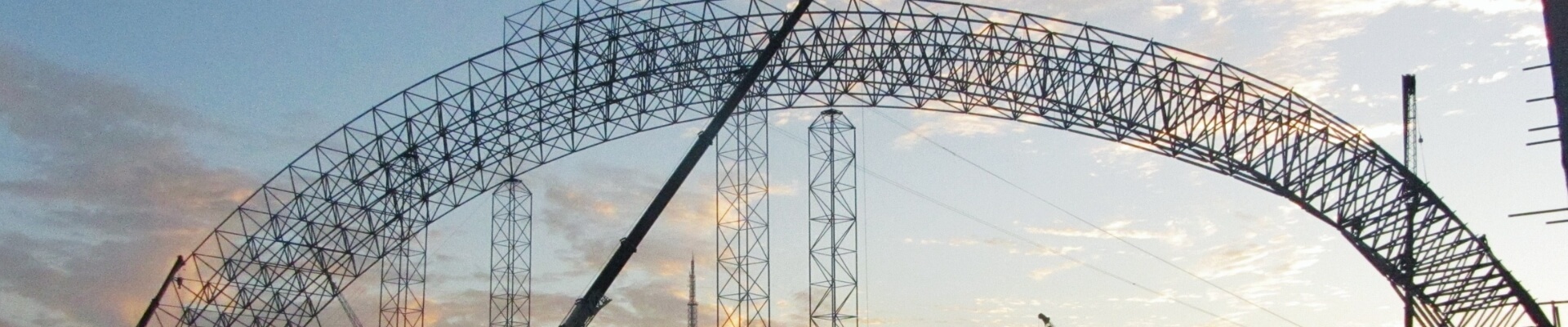
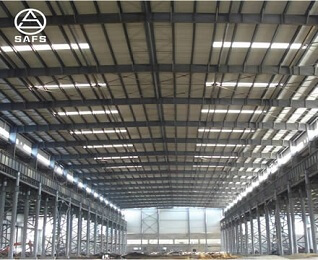
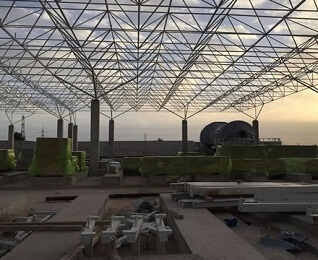
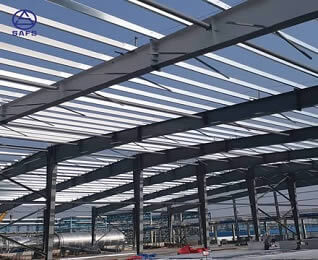
Hydropower plant powerhouses require fully open internal spaces to accommodate large turbine-generator unit placement and major equipment hoisting. SAFS employs large-span steel frame and space frame composite systems adapted to hydropower operating conditions—eliminating dense column layouts and extending both transverse and longitudinal spans to meet standard powerhouse construction requirements. The resulting open, well-organized space accommodates multiple unit configurations while reserving ample room for future capacity expansion and process upgrades.
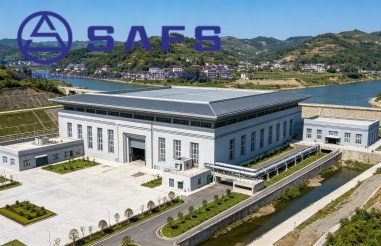
International engineering guidelines specify that for powerhouse columns supporting crane rails, the lateral displacement at the crane rail top must not exceed H/2,000 under normal service conditions, with longitudinal displacement limited to H/4,000. These stringent deflection criteria demand structural systems with exceptional stiffness and precision—capabilities that SAFS‘s engineered steel frame systems are designed to deliver.
Hydropower powerhouses continuously bear the reciprocating operation of lifting equipment, turbine-generator self-weight loads, and equipment-induced vibration. Structural stability directly affects plant safety. SAFS reinforces main beams, support frames, and connection nodes specifically for hydropower heavy-load characteristics, scientifically distributing equipment loads and mechanical vibration stress. While ensuring structural safety redundancy, we optimize overall structural self-weight to avoid over-design and resource waste—aligning with Africa‘s hydropower project requirements for quality improvement and cost control.
Modern hydropower projects demonstrate the scale involved: the Julius Nyerere project‘s nine units required comprehensive structural support for turbine-generators, inlet valves, and auxiliary systems. In China‘s Tai‘an Pumped Storage Station, two 300-ton bridge cranes with 24-meter spans were installed in the main powerhouse—highlighting the heavy lifting loads that powerhouse structures must accommodate.
Hydropower equipment involves dense piping and complex installation sequences, requiring powerhouse structures that align with equipment installation workflows. SAFS matches equipment dimensions, hoisting paths, and maintenance access during the design phase—precisely planning floor heights, column spacing, and lifting operation zones. The orderly structural layout does not interfere with crane travel paths, significantly reducing equipment installation difficulty and shortening unit commissioning and production startup cycles.
African river-valley power plant sites feature high humidity, heavy moisture, and significant day-night temperature differentials. Standard steel structures are prone to deformation and corrosion that can affect equipment operation safety. SAFS optimizes anti-corrosion, waterproofing, and deformation-resistant processes specifically for waterside high-humidity conditions. Meanwhile, factory prefabrication and on-site assembly deliver high component precision and fast construction speed, adapting to remote hydropower site conditions and ensuring on-schedule project delivery.
Drawing on mature hydropower steel structure engineering experience, SAFS possesses precise mastery of powerhouse large-span layout, equipment load adaptation, and spatial optimization essentials. We can undertake full-scope steel structure engineering for African hydropower main powerhouses and supporting facilities. Through safe, stable, highly adaptable, and easily maintained customized solutions, we resolve equipment installation and space utilization challenges—helping partners build standardized, modern hydropower powerhouses and empowering the steady development of Africa‘s clean energy industry.
Contact Xuzhou SAFS Steel Structure Engineering Co., Ltd.
Specializing in steel structure engineering, pipe truss engineering, space frame engineering, welded ball space frames, trestle engineering, and related fields.