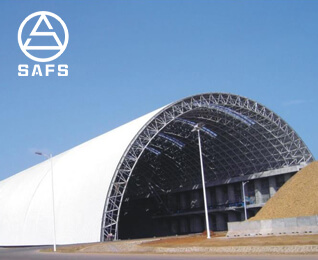
Dapeng Town Industrial Park, Tongshan District, Xuzhou City, Jiangsu Province, China
The morning sun in East Africa shines on a booming construction landscape. From the Eastern Industrial Zone in Addis Ababa, to the logistics parks of Mombasa Port, and the modern industrial clusters around Nairobi, East Africa‘s industrialisation is advancing at an unprecedented pace. Ethiopia has built over 20 industrial parks, attracting more than 3,309 Chinese investment projects and USD 8.5 billion. Meanwhile, Grade‑A warehouse occupancy in Kenya has climbed to 83%, reflecting surging logistics demand.
As a steel structure team deeply rooted in this market, we understand the pressing challenge you face as an owner or developer: how to maximise spatial efficiency on limited land. Conventional concrete structures or light‑gauge steel often restrict production line flexibility and large‑equipment maneuverability due to intrusive columns.
That is where we step in.
Responding to the realities of East African industrial construction — soaring logistics warehousing demand, local manufacturing policies, and the pursuit of speed and cost efficiency — our large‑span roof design is the key to solving these challenges. Our advantage lies not just in steel assembly, but in our ability to “return space to its purest form.”
Built for Efficiency, Unleashing Core Productivity
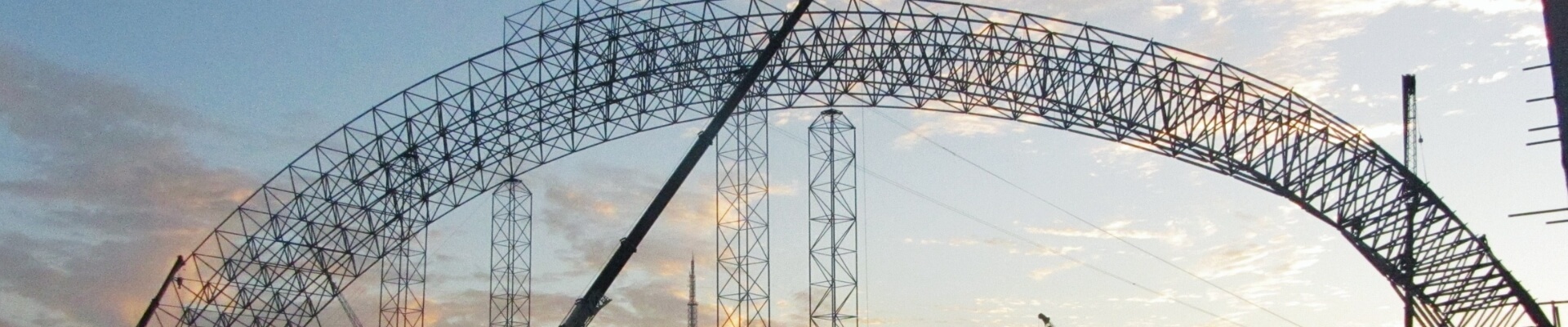
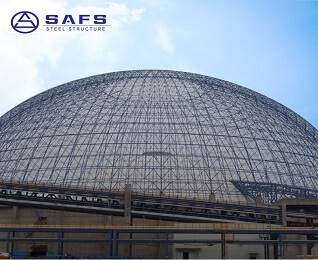
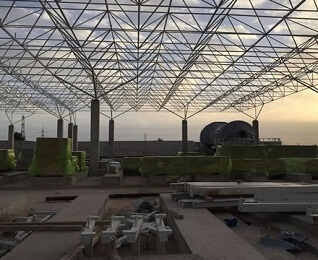
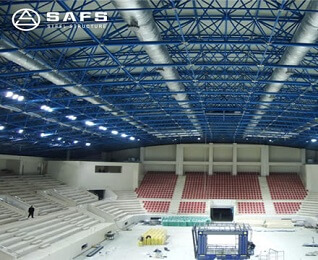
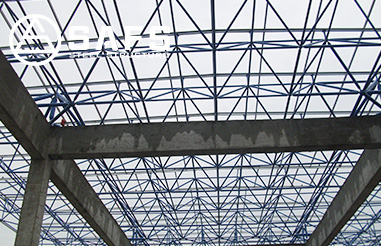
We specialise in large‑span roof design, achieving column‑free spans of 30 meters or more. That means unobstructed factory floors, flexible production layouts, 360‑degree robotic operations, and stacking that reaches the roof. For owners, column‑free space translates directly into higher land efficiency and greater operational flexibility.
Structure Optimised to Address Cost Pressure
The East African market is highly cost‑sensitive. Through precise structural calculations, we optimise steel tonnage without compromising safety. Compared with traditional multi‑column designs, our approach reduces the number of foundation pads (a significant saving given East Africa‘s complex soil conditions) and shortens construction time through prefabrication. Developers understand that time is cash flow — faster completion means faster returns on their investment. Our solutions also offer lower long‑term maintenance and insurance costs, delivering exceptional lifecycle value and reducing operational risks.
Climate‑Responsive, Combing Aesthetics with Durability
East Africa‘s intense UV radiation, heavy rainfall, and thunderstorms put roofing systems to the test. We incorporate precision drainage slopes, wind‑uplift resistant connections, and thermal expansion compensation into our designs, ensuring reliability under extreme weather. At the same time, the openness and streamlined appearance of our large‑span structures elevate your industrial building from a plain steel shed to a distinctive landmark within your park — enhancing its marketability and long‑term asset value.
Our Success Story
Take a modern logistics park project near Mombasa, where the client is a leading domestic logistics service provider. We designed and built a column‑free warehouse spanning over 60 meters using our modular steel structure system. From design to delivery, the project was completed in just 87 days — 45% faster than a conventional cast‑in‑place approach. Precise factory prefabrication minimised on‑site work and waste; the entire construction process generated almost no wet‑trade waste. The warehouse was fully operational immediately upon completion, with the client‘s storage turnover efficiency improving by over 50%.
In East Africa, every piece of land carries the dream of industrial take‑off. We do more than provide steel structure design — we reconstruct the spatial logic of industrial buildings for you.
If you are planning a logistics warehouse, heavy manufacturing plant, or large production base, we invite you to speak with us. Let us use our large‑span technology to remove a column and add a future to your project.