Dapeng Town Industrial Park, Tongshan District, Xuzhou City, Jiangsu Province, China
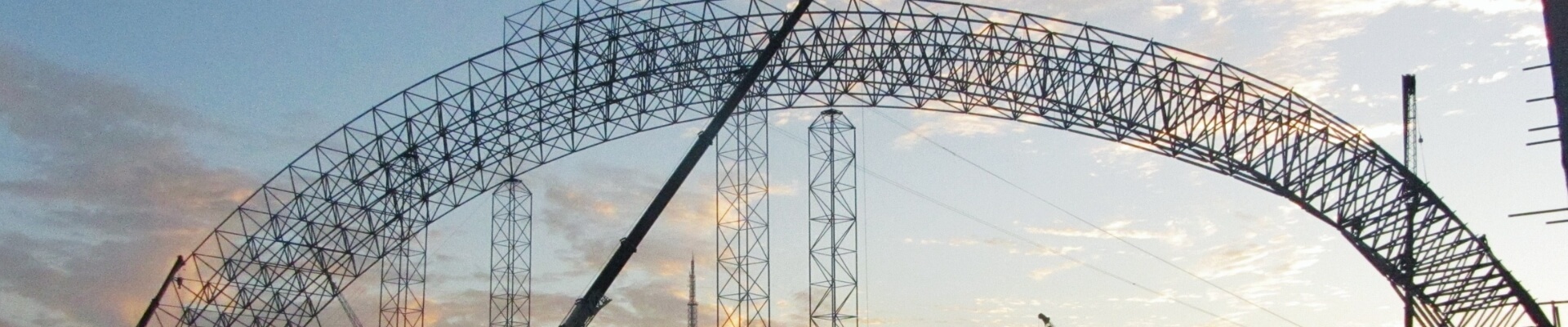
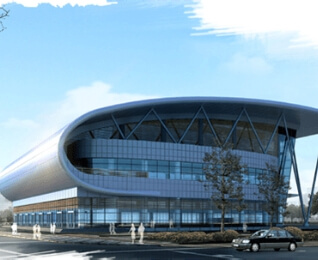
Constructing mega-span stadiums in the Middle East presents a unique set of challenges: scorching temperatures exceeding 50°C, relentless sandstorms, stringent international quality standards, and the architectural demand for column-free stands seating tens of thousands. To balance speed, strength, and performance, architects and engineers are increasingly turning to steel pipe truss structures.
From the iconic 310-meter-wide Lusail Stadium in Qatar to the ambitious new arenas rising in Saudi Arabia and the UAE, the region’s infrastructure boom requires systems that remain stable under extreme conditions. Steel pipe trusses have emerged as the premier choice due to three unrivaled advantages:
Extreme Environmental Resilience: Utilizing high-strength Q355 series steel, these structures effectively resist erosion from sand and humidity. Moreover, the use of prefabricated components significantly reduces on-site labor during the intense summer heat.
Precision for Iconic Designs: With installation precision reaching 180mm and tolerances kept within 25mm, this technology is ideal for the complex, sweeping curves and massive domes that define modern Middle Eastern landmarks.
Speed Without Compromise: By pre-manufacturing 95% of components in a factory setting, on-site construction time is slashed by 60% compared to traditional concrete. This efficiency is vital for meeting the tight deadlines of global sporting events.
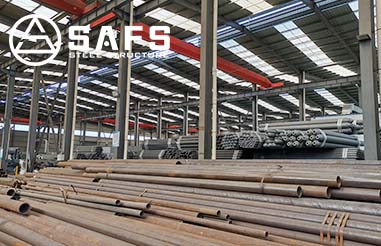
In the Middle East, steel pipe trusses are more than just a building method; they are a durable, adaptable investment.
For engineering firms and project owners, steel pipe truss technology transforms “impossible” mega-spans into durable, world-class landmarks. It’s no wonder that 68% of new stadiums globally now favor steel over traditional materials.