Dapeng Town Industrial Park, Tongshan District, Xuzhou City, Jiangsu Province, China
Copper smelting involves continuous production flows, massive equipment, and complex environmental conditions—making the steel structure design of the main workshop a multifaceted engineering challenge. Span selection, equipment load transfer, maintenance space provisions, corrosion resistance, and construction interface coordination all require careful planning. The workshop structure is not an isolated frame; it must integrate deeply with the production process.
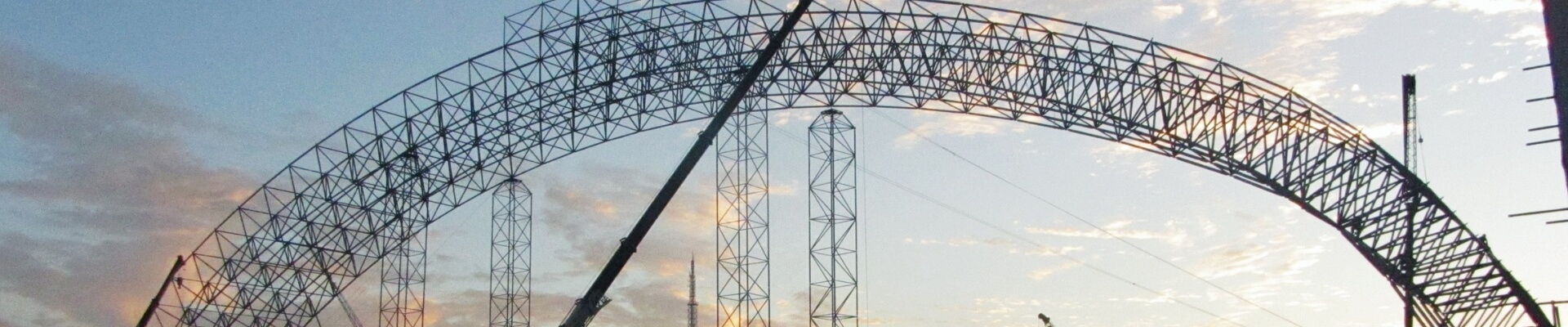
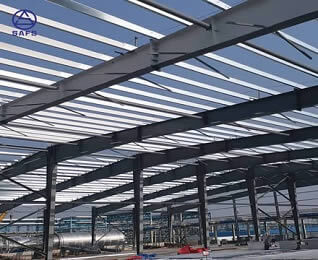
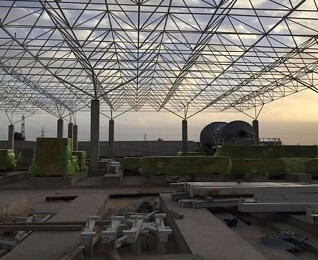
Smelting equipment is typically large and concentrated in weight. The main workshop requires sufficient span and load-bearing capacity to accommodate furnace bodies, flues, and lifting facilities. Structural layout must align precisely with process equipment positioning to support smooth production flow. Main steel structure span selection and column grid arrangement often determine whether equipment can be properly positioned, while load path organization is essential for structural safety.
International standards provide the framework: China‘s GB 50959-2013 Code for Loads on Non-Ferrous Metal Engineering Structures specifies load classifications, combinations, and coefficients for smelting projects—covering permanent loads, variable loads (floor/ground loads, dynamic machine loads, crane loads, industrial furnace foundation loads), and accidental loads . The code requires that process loads be formally provided by the process discipline in written, tabular, or graphical form, ensuring structural design is grounded in accurate equipment data .
Large equipment requires periodic maintenance and replacement. The workshop must reserve adequate lifting height and operational access to make maintenance work safe and efficient. Reasonable spatial planning can significantly reduce the impact of shutdown maintenance on production rhythm. Pre-planning maintenance paths ensures every service operation has a clear procedure.
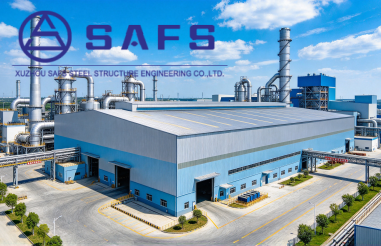
Copper smelting generates high temperatures, sulfur-containing gases, and dust. Steel structures require targeted material and protection design to resist corrosion, ensure long-term service life, and reduce maintenance burdens. Research confirms that flue gas in copper smelting typically contains SO₂ (10–30 vol%) and other corrosive components, with chlorine-containing compounds further accelerating corrosion in modern smelting systems that process secondary raw materials . Appropriate protective solutions—including high-performance coatings and cladding systems—keep the workshop stable under high-intensity operations.
Interface coordination tests the collaboration between suppliers and process/equipment design teams. Equipment foundations, pipe supports, maintenance platforms, and other interfaces are numerous. Only through advance communication and close cooperation can design-construction conflicts be avoided. Smooth coordination is key to completing complex workshops on schedule.
Africa‘s copper smelting capacity is expanding rapidly. In Zambia, Konkola Copper Mines (KCM) signed a $498 million contract with China NERIN Engineering in September 2026 for a Tailings Leach Plant at Nchanga, designed to recover approximately 70,000 tonnes of copper annually from historical tailings, with construction expected to take 24 months . Sinomine Resource‘s Kitumba copper project in Zambia’s Central Province commenced integrated trial production in September 2026, with its smelting section—designed for 35,000 tonnes per year of copper cathode—targeting trial production in Q4 2026 and formal operation in Q1 2027 . In the DRC, the Nuowei Mining 50,000-ton-per-year Copper Processing and Smelting Project (Phase I) commenced production in June 2026, with China Railway No.9 Group completing the full production chain including steel structure erection . These projects reflect sustained demand for specialized smelter workshop steel structures across Africa.
SAFS Steel Structure can align with process flows and equipment conditions, working closely with process and equipment design teams to deliver complete solutions spanning structural design, detailed fabrication, and on-site support. A thorough technical collaboration often makes construction twice as effective. Smelter owners and general contractors are welcome to engage with us on specific projects—building smelter workshops together, steadily and reliably.
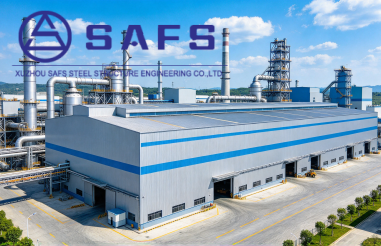
Specializing in steel structure engineering, pipe truss engineering, space frame engineering, welded ball space frames, trestle engineering, and related fields.