Dapeng Town Industrial Park, Tongshan District, Xuzhou City, Jiangsu Province, China
“Is steel construction sustainable?” This is one of the most frequently asked questions on Google—and one that overseas investors and municipal project directors are increasingly concerned about. With environmental building regulations being introduced worldwide, carbon taxes and green building certifications have become hard requirements for project approval. Everyone wants to know: can steel structures meet long-term sustainability requirements? Drawing on globally recognized environmental testing data and extensive overseas project experience, SAFS Steel Structure breaks down the environmental advantages of steel structures in plain terms—helping clients overcome their concerns about green construction.
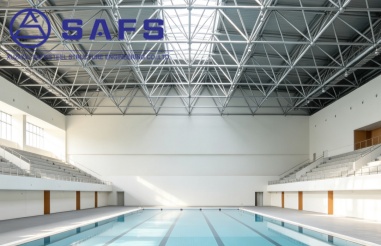
First and foremost, steel offers the core advantage of nearly lossless circular recycling. When a building reaches the end of its service life and needs to be demolished, concrete and masonry can mostly only be disposed of as construction waste—difficult to reuse and generating large amounts of dust and solid waste that contaminates the site. In contrast, complete steel structural components, after simple processing, can be returned to the furnace to produce new construction steel, with recovery rates reaching over 90%. A single batch of building materials can be recycled multiple times, dramatically reducing resource consumption from mining and building material production, and fundamentally lowering the construction industry‘s environmental impact.
Second, steel structure construction is more resource-efficient throughout the entire process, reducing various forms of waste. Traditional cast-in-place construction requires large quantities of cement and aggregates, with material loss, wastewater, and waste can be seen everywhere. Most steel structure components are uniformly fabricated in factories, with precisely calculated material dimensions—virtually eliminating material waste. On-site assembly only requires bolting and welding, significantly reducing water consumption and construction waste generation. There is also no need to occupy land for long-term material storage, minimizing the impact on the surrounding ecological environment—making steel structures particularly suitable for ecologically sensitive suburban and coastal projects.
Steel structures also deliver long-term reductions in daily energy consumption. Steel is lightweight, so building foundations do not require large-scale excavation and reinforcement, reducing vegetation damage from earthwork. When combined with insulation panels and translucent roofing systems, indoor temperature control energy consumption is far lower than that of heavy concrete buildings—continuously saving water and electricity costs during the operational phase. In many overseas green building rating systems, steel structure projects more easily earn environmental credits and smoothly pass local sustainable construction approvals, avoiding additional carbon costs.
Many clients raise a legitimate concern: steel smelting itself produces carbon emissions—so how can it still be called a sustainable building material? The key lies in the lifecycle perspective. When measuring the complete process of construction, use, demolition, and recycling, the overall carbon footprint of steel structures is far lower than that of traditional building materials. Moreover, the industry is increasingly adopting low-carbon smelting and green anti-corrosion technologies, further narrowing the carbon emission gap during the production phase.
From 2026 onward, as the EU Carbon Border Adjustment Mechanism (CBAM) enters its full implementation phase, carbon-related fees will be applied to imported steel and steel-containing products. The default emissions values set by the policy often exceed 3 tons of CO₂ per ton of steel, and these values will increase by 10% annually from 2026 to 2028. This creates a direct incentive for market participants to prioritize suppliers with proven low-carbon production capabilities. For companies lacking supply chains certified for their carbon footprint, the ability to compete in regulated markets will be severely constrained. Under this new policy framework, carbon certification is rapidly becoming as fundamental as quality control in securing international project contracts—making the choice of a sustainable steel structure partner more critical than ever.
As a steel structure service provider with years of deep cultivation in overseas markets, SAFS integrates sustainable construction principles into every aspect of our service. We optimize component design to reduce steel consumption, select environmentally friendly anti-corrosion coatings, and provide clients with demountable, recyclable modular steel structure solutions. Balancing project cost, operational needs, and environmental standards, we help global partners effortlessly create steel structure buildings that comply with green policies in various countries and achieve long-term low-carbon sustainability.
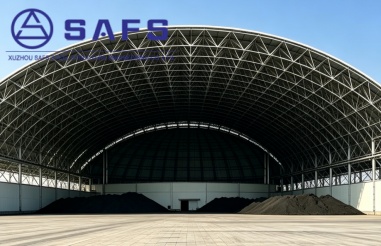
Contact SAFS Steel Structure Engineering Co., Ltd. (SAFS)
Specializing in steel structure engineering, pipe truss engineering, space frame engineering, welded ball space frames, trestle engineering, and related fields.