Dapeng Town Industrial Park, Tongshan District, Xuzhou City, Jiangsu Province, China
For investors developing cold chain warehouses in Tanzania, the core priorities are consistent temperature control, minimal operational maintenance, and round-the-clock safe operation. The region‘s distinct tropical coastal climate—characterized by high temperatures, high humidity, intense UV radiation, and frequent land-sea gusts—poses three critical challenges for cold storage facilities: roof insulation, structural wind resistance, and material weather resistance. Conventional steel structure systems struggle to meet the demanding standards of long-term cold chain operations, often leading to soaring energy costs and accelerated structural degradation.
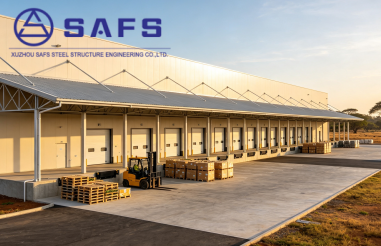
Tanzania’s cold chain sector is experiencing unprecedented growth. The market was valued at approximately $10.88 billion in 2024 and is projected to reach $14.85 billion by 2029, growing at a compound annual growth rate (CAGR) of 8.28%. The warehousing and distribution logistics market is expanding rapidly, with cold storage warehousing emerging as a key segment. Cold-chain logistics has become a critical enabler of Tanzania‘s export competitiveness, with rising regional and international demand making investment in temperature-controlled storage commercially viable and strategically necessary.
Major infrastructure projects are driving this demand. The Kilwa Masoko Fisheries Port—now at 98.9% completion as of June 2026—features a comprehensive 20,000m³ cold storage facility designed for the harsh tropical climate of coastal Tanzania, supporting fresh fish pre-cooling, blast freezing, long-term frozen storage, and on-site ice production. The Tanzanian government has announced a $2 billion investment to expand and modernize the Port of Dar es Salaam, including the development of advanced cold storage facilities to support avocado and agricultural exports. The $1.4 billion TAZARA railway rehabilitation will introduce refrigerated freight wagons for perishable agricultural exports. Zanzibar has launched the $300 million Mangapwani Integrated Port to become a premier logistics gateway for East Africa. ARCH Emerging Markets Partners is constructing new 8,000-pallet temperature-controlled facilities in Dar es Salaam and other East African hubs, launching from late 2026 through 2027. The FY2026/27 budget also includes a two-tranche border-market upgrade program adding 15 new facilities with cold storage across Tanzania‘s main agricultural export corridors.
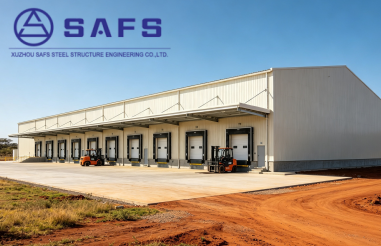
Inadequate roof insulation materials represent the most prominent operational shortfall for local cold storage facilities. Cold chain warehouses rely on their building envelope to block external heat and maintain internal low temperatures—demanding extremely high standards for panel thermal conductivity, core material density, and sealing workmanship. With Tanzania’s year-round high ambient temperatures and persistent day-night temperature differentials, locally available standard insulation panels offer weak thermal performance, and crude joint sealing creates thermal bridge leakage paths. Under long-term operation, refrigeration equipment runs continuously at high load, driving monthly energy consumption ever upward. Meanwhile, condensation from temperature differentials penetrates panel interlayers, gradually causing insulation layers to absorb moisture and fail—completely undermining the facility‘s temperature-controlled storage capability.
Beyond insulation shortcomings, frequent gusts in open areas impose stringent wind resistance requirements on cold storage structures. Coastal and peri-urban warehousing zones in Tanzania lack natural windbreaks. Land-sea convective gusts are frequent with significant instantaneous wind pressure fluctuations. Cold storage facilities typically feature large-span open layouts with extensive roof areas exposed to wind. Conventional steel frames lack sufficient bracing stiffness, and roof panel interlocking strength is inadequate. High winds can easily dislodge panels and shift joint load paths—compromising not only envelope airtightness but also overall structural stability, threatening the continuous safe operation of cold chain warehouses.
The combination of complex wind conditions and equatorial extremes continuously intensifies the long-term weathering pressure on warehouse steel structures and roofing systems. Year-round UV indices remain extremely high, combined with rainy-season humidity, salt spray, and alternating wet-dry cycles—creating compound corrosive and weathering conditions. Standard protective coatings and conventional cladding panels offer limited resistance to aging and corrosion. After prolonged exposure to sun and rain, they are prone to paint chalking, panel embrittlement, and fastener rusting. Cold chain facilities cannot afford frequent shutdowns for repair. Rapid material aging significantly shortens warehouse service life while continuously increasing future refurbishment and retrofit costs.
Drawing on professional expertise, SAFS Steel Structure delivers targeted solutions to the three core challenges of cold storage facilities. We select cold-chain-specific high-density insulation cladding panels, optimize joint sealing and thermal bridge elimination techniques to stabilize internal temperatures and reduce operational energy consumption. Using site-measured wind pressure data, we optimize the main structural bracing and roof fixing systems to enhance overall wind performance for gust conditions. We apply tropical-climate-specific weather-resistant anti-corrosion coatings and aging-resistant roofing systems that provide long-term protection against UV weathering and moisture corrosion.
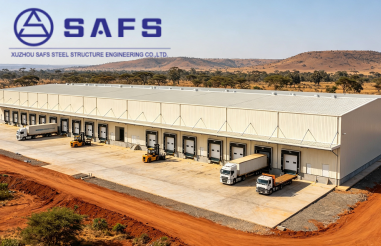
With years of deep cultivation in Tanzanian cold chain steel structure projects, SAFS is intimately familiar with local climate parameters and cold storage operational standards. We focus on the refined execution of structural, roofing, and cladding systems. Through locally adapted design and standardized precision craftsmanship, we effectively resolve insulation failure, insufficient wind resistance, and weak weather resistance—helping owners build low-energy, high-stability, low-maintenance long-term cold chain storage systems.
Contact Xuzhou SAFS Steel Structure Engineering Co., Ltd. (SAFS)
Specializing in steel structure engineering, pipe truss engineering, space frame engineering, welded ball space frames, trestle engineering, and related fields.